Table of Contents
- Why Business Van Leasing Matters for Your Fleet
- Contract Hire vs Finance Lease for Vans: Which Suits Your Business
- Business Van Leasing Tax Benefits Under HMRC Rules
- Electric Van Leasing for Businesses: Cost and Compliance
- Van Leasing Whole Life Cost Analysis: What Matters
- 10 Business Van Leasing Solutions Compared
- Key Considerations When Choosing a Van Lease
- Conclusion
- Frequently Asked Questions
Last Updated: September 28, 2026
Why Business Van Leasing Matters for Your Fleet
Business van leasing has become essential for companies managing field operations, domiciliary care services, and growing SMEs. Rather than tying capital to vehicle ownership, leasing lets you scale your fleet quickly, maintain predictable costs, and focus resources on core business activities.
The real advantage isn't just flexibility, it's control. When you lease, you know exactly what you're paying each month. Maintenance, roadside assistance, and compliance fall to your leasing partner. For fleet managers juggling 50+ vehicles across multiple regions, that simplification matters enormously.
At OVL Group, we've worked with fire and security businesses and care providers. The pattern is consistent: teams that move from ownership to leasing recover operational capacity they didn't know they'd lost. They stop chasing maintenance schedules and start focusing on customer delivery.
Business van leasing also aligns with modern fleet strategy. Whether you're managing a small domiciliary care operation or a sprawling field service network, the right lease structure, combined with whole life cost analysis, transforms how you think about vehicle investment.
Contract Hire vs Finance Lease for Vans: Which Suits Your Business
Contract hire and finance lease serve different business needs. Understanding the distinction shapes every decision that follows.
Contract hire is straightforward: you pay a fixed monthly fee, and the leasing company owns the van throughout. Maintenance, insurance, and roadside cover typically bundle into that payment. You return the vehicle at lease end with no residual value concerns. This suits businesses wanting predictability and minimal administrative burden.
Finance lease works differently. You're essentially financing the vehicle's depreciation over the lease term, then owning it outright at the end (or paying a balloon payment). You handle maintenance independently, though you may contract it separately. This approach appeals to businesses wanting long-term vehicle control or those planning to keep vans beyond the initial lease period.
The choice hinges on three factors: how long you keep vehicles, whether you want bundled support, and your tolerance for maintenance management. A care provider running consistent routes with stable staffing might favour contract hire's simplicity. A field service company with bespoke vehicle modifications might prefer finance lease's ownership path.
OVL Group specializes in tailoring these structures to your actual operations. Rather than forcing every client into one model, we analyse your fleet usage, cost profile, and growth plans to recommend the approach that minimises whole life costs.
Business Van Leasing Tax Benefits Under HMRC Rules
HMRC rules create meaningful tax advantages for leased vehicles, particularly when structured correctly. Understanding these benefits requires precision, the difference between optimizing and overlooking them is substantial.
Lease payments as a business expense: Monthly lease payments are fully deductible against taxable profits, provided the van is used for business purposes. This is straightforward and applies to both contract hire and finance lease arrangements.
Salary sacrifice schemes: This is where significant savings emerge. Employees receive a van as part of their remuneration package, and the employer deducts the cost from gross salary. Both employer and employee benefit: the employer avoids National Insurance contributions on the deducted amount, and the employee reduces their taxable income. For businesses operating salary sacrifice schemes, the combined savings can be substantial.
Capital allowances (finance lease only): If you finance-lease a van, you may claim capital allowances on the depreciation element. This reduces your taxable profit further. The specifics depend on the lease structure and vehicle type, so professional guidance is essential.
VAT recovery: Lease payments include VAT, which is recoverable if your business is VAT-registered. This improves cash flow significantly across a fleet.
The critical point: HMRC compliance isn't optional. Misclassifying a lease or miscalculating salary sacrifice exposure creates audit risk. OVL Group works within HMRC guidelines to ensure your structure is defensible and optimized. We've guided fire and security businesses and care providers through salary sacrifice implementation without compliance issues.
HMRC guidance on vehicle lease taxation
Electric Van Leasing for Businesses: Cost and Compliance
Electric vans are no longer niche. They're becoming mainstream for businesses managing urban delivery, field service calls, and community care routes where daily mileage is predictable.
The business case centres on three elements: fuel cost savings, maintenance reduction, and grant eligibility. Electric vans can cost less to charge than diesel vans cost to fuel. Electricity can be cheaper per mile, and the gap widens as energy costs fluctuate. Maintenance can be lighter, with no oil changes, fewer moving parts, and longer brake life due to regenerative braking. Some businesses qualify for capital allowances or government grants when purchasing or leasing electric vehicles.
Range anxiety is real but often overstated for business use. Most field service routes and domiciliary care visits cluster within 100-150 miles per day. Modern electric vans deliver 200+ miles per charge. Overnight charging at a depot or home base solves the problem for most operations.
The lease advantage: you avoid battery degradation risk. Battery replacement can be costly; with a lease, that responsibility transfers to the leasing company. You also sidestep obsolescence risk as battery technology evolves.
Cost comparison matters.
Van Leasing Whole Life Cost Analysis: What Matters
Whole life cost analysis is the framework that separates smart leasing decisions from costly ones. It looks beyond the monthly payment to capture every expense across the lease term.
A complete whole life cost model includes:
- Lease payment: Your fixed monthly cost
- Fuel: Actual consumption based on your routes and vehicle type
- Maintenance and repairs: Scheduled servicing plus unexpected breakdowns
- Insurance: Van and driver cover, fleet policies
- Tax and compliance: HMRC obligations, MOT, licensing
- Residual value: For finance leases, the vehicle's worth at lease end
10 Business Van Leasing Solutions Compared
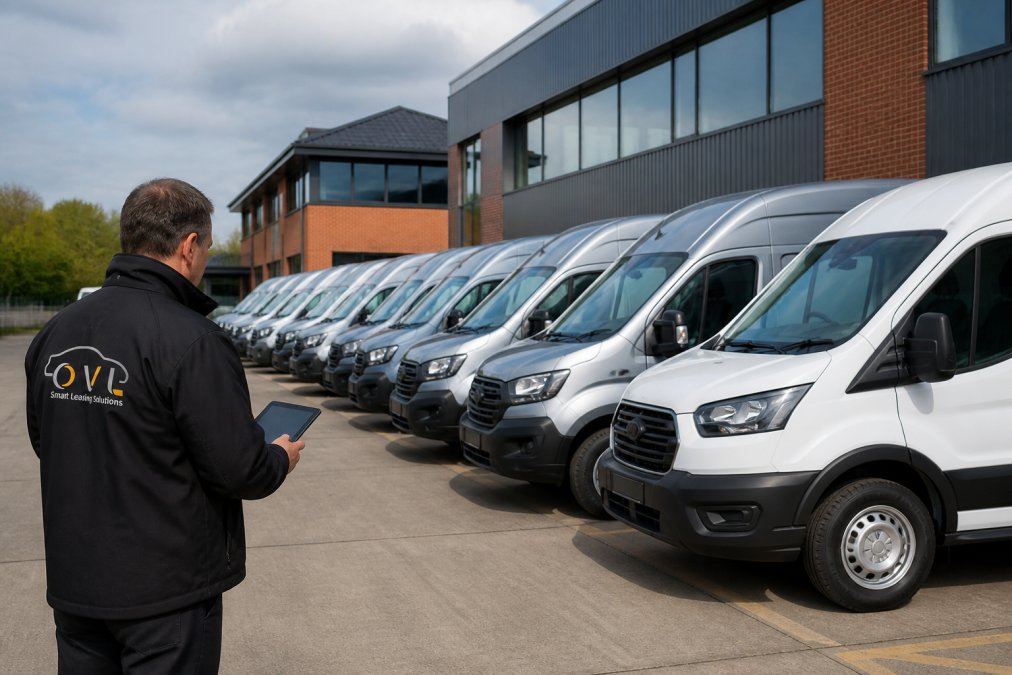
OVL Group: Tailored Fleet Management and Salary Sacrifice
OVL Group stands apart because we build leasing structures around your actual operations, not template solutions. We specialise in whole life cost analysis, salary sacrifice schemes, and fleet management support for businesses managing 50+ vehicles through to large multi-site operations.
Standard Contract Hire Providers
Contract hire remains the dominant model for businesses wanting simplicity. Monthly payments bundle maintenance, roadside assistance, and often insurance. You return the van at lease end with no residual value complications.
This model suits businesses with:
- Predictable fleet sizes and stable growth
- Limited mechanical expertise in-house
- Preference for fixed, budgeted costs
- No interest in long-term vehicle ownership
Finance Lease Specialists
Finance lease appeals to businesses wanting eventual ownership or those with bespoke vehicle requirements. You finance the depreciation, handle maintenance separately, and own the van at lease end.
This suits:
- Businesses with specialized equipment needs (custom shelving, roof racks, signage)
- Operations running vehicles beyond five years
- Companies wanting to build asset value over time
- Fleets with predictable, controlled mileage
Electric and Hybrid Van Leasing
Electric van leasing is accelerating as battery costs fall and range improves. Specialists in this space offer guidance on charging infrastructure, grant eligibility, and total cost of ownership for electric fleets.
Key considerations:
- Daily mileage patterns (electric works best for predictable, moderate distances)
- Charging access (depot, home, or public infrastructure)
- Grant availability for your business type
- Long-term fuel cost savings versus higher initial lease payments
Minibus and Specialist Vehicle Leasing
Some businesses need minibuses for staff transport, client visits, or community services. Specialist leasing providers focus on these vehicles and the compliance requirements they carry (driver training, passenger safety, insurance implications).
Key Considerations When Choosing a Van Lease
Account management quality: Will you have a dedicated contact who understands your business, or are you a ticket number? For fleets of 50+ vehicles, dedicated support transforms the experience. You want someone who proactively flags cost-saving opportunities and handles compliance without you chasing them.
Conclusion
Business van leasing transforms how you manage fleet costs, compliance, and growth. The right structure, whether contract hire, finance lease, or electric, aligns with your operational reality and tax situation. The right partner ensures you capture every cost-saving opportunity and stay compliant with HMRC rules.
Frequently Asked Questions
What are the tax benefits of business van leasing in the UK?
Business van leasing offers significant tax advantages under HMRC rules. Lease payments are typically allowable business expenses and can be deducted from taxable profits. If your van is used wholly for business purposes, you can claim the full lease cost. For salary sacrifice schemes, employees benefit from reduced National Insurance contributions, whilst employers save on employer's National Insurance. Electric vans qualify for enhanced capital allowances, offering additional tax relief. Consult your accountant to ensure compliance with HMRC regulations specific to your business structure.
Is it better to lease or buy a van for a business in the UK?
Leasing offers flexibility, predictable costs, and no depreciation risk, making it ideal for growing businesses and those managing large fleets. Buying provides ownership and long-term cost control but requires capital investment and exposes you to residual value risk. Leasing works best if you need regular vehicle updates, want to avoid maintenance hassle, or prefer fixed monthly budgets. Buying suits businesses with stable, long-term vehicle needs and sufficient capital. Most mid-market enterprises find leasing reduces administrative burden and improves cash flow.
What is the difference between contract hire and finance lease for UK businesses?
Contract hire is a pure rental arrangement where the leasing company owns the vehicle, handles maintenance, insurance, and roadside assistance. You pay a fixed monthly fee and return the van at lease end. Finance lease is a longer-term arrangement where you effectively own the vehicle for accounting purposes and cover maintenance yourself. Contract hire suits businesses wanting simplicity and predictability; finance lease appeals to those seeking lower overall costs and more control. Both offer tax benefits, but contract hire typically provides greater peace of mind for fleet managers.
How does whole life cost analysis help when choosing a business van lease?
Whole life cost analysis considers every expense over the lease term: finance charges, fuel, maintenance, repairs, insurance, road tax, and residual value. This approach reveals the true cost of ownership beyond the headline monthly payment. Electric vans may show higher upfront lease costs but lower fuel and maintenance expenses, potentially offering better overall value. Professional fleet consultants like OVL Group calculate whole life costs to help you compare options fairly and identify which leasing solution genuinely optimises your budget and operational needs.