Table of Contents
- 1. Implement Predictive and Preventative Maintenance
- 2. Align Your Fleet with DVSA Vehicle Maintenance Standards
- 3. Deploy Fleet Management Software Features That Matter
- 4. Optimise Route Planning and Reduce Idle Time
- 5. Conduct Whole Life Cost Analysis for Fleets
- Why Fleet Uptime Management Matters to Your Bottom Line
- Conclusion
Fleet uptime management is the practice of keeping vehicles operational and available for service through strategic maintenance planning, real-time monitoring, and data-driven decision-making. For fleet managers overseeing 50+ vehicles, downtime isn't just an operational inconvenience, it's a direct hit to revenue, customer satisfaction, and competitive standing. OVL Group works with field service companies, domiciliary care providers, and mid-market enterprises to build uptime strategies that actually stick. Below, we'll show you the five practices that separate fleets running at 95%+ availability from those bleeding money through preventable breakdowns.
1. Implement Predictive and Preventative Maintenance
The difference between a fleet that limps along and one that runs reliably comes down to whether you're fixing vehicles after they break or stopping failures before they happen.
Predictive maintenance uses telematics data, engine diagnostics, fluid temperatures, and brake wear patterns to flag problems weeks before they become roadside breakdowns. Preventative maintenance is the scheduled work you do at regular intervals to keep those systems healthy. Together, they're your foundation for fleet uptime management.
Most fleet managers still operate reactively. A vehicle fails, it goes off the road, and suddenly you're scrambling for a replacement while repair costs spike. Predictive approaches flip that: you catch worn brake pads at 80% life, not when they're metal-on-metal. You spot a coolant leak before the engine overheats.
Building Your Preventative Maintenance Checklist
Your preventative maintenance checklist should be vehicle-specific, not generic. A transit van doing daily urban deliveries needs different intervals than a minibus used for occasional school runs.
Start with your vehicle manufacturer's recommended service schedule, then layer in your own operational data: how many miles your vehicles typically run per month, the terrain they cover, the loads they carry. A van running 3,000 miles monthly through city traffic will wear brakes faster than one running 1,500 miles on motorways.
Your checklist should include:
- Oil and filter changes (typically every 10,000-15,000 miles for commercial vehicles)
- Fluid top-ups: coolant, brake fluid, windscreen wash, power steering fluid
- Brake pad inspection and replacement thresholds
- Tyre pressure, tread depth, and rotation schedules
- Battery condition checks
- Suspension and steering component inspection
- Air filter and cabin filter replacement
- Lights, wipers, and safety equipment function checks
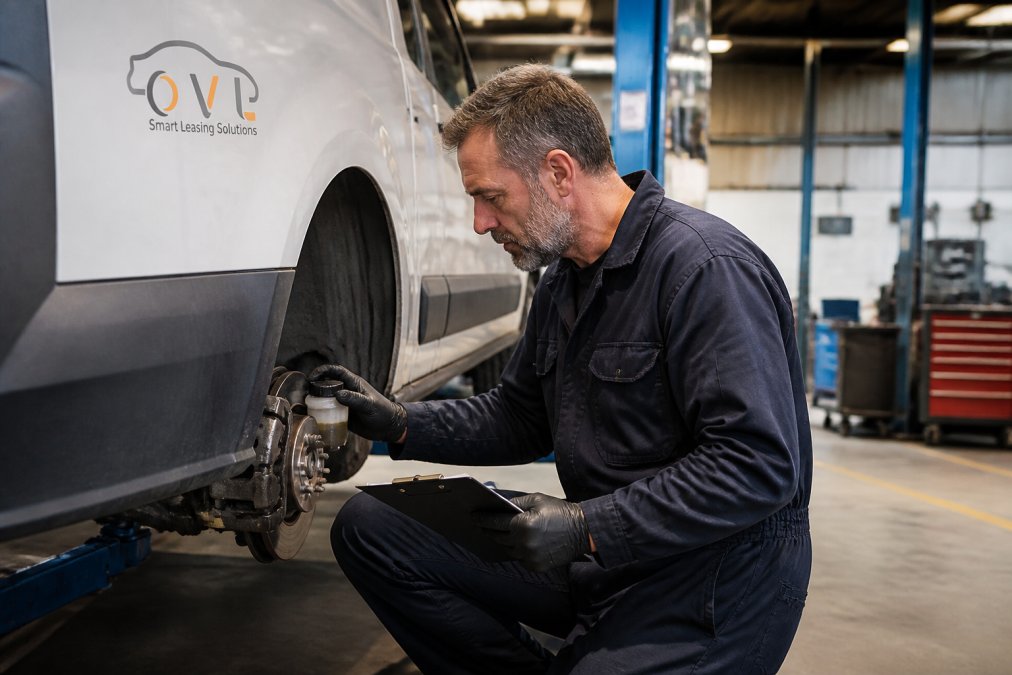
Assign responsibility clearly. Whether your maintenance happens in-house, with a contracted network, or through a mix of both, someone needs to own the schedule and track compliance. Missed services don't just increase breakdown risk, they can void manufacturer warranties and create liability issues if a failure causes an accident.
Using Telematics for Early Warning Signs
Telematics systems collect real-time data from your vehicles: engine temperature, fault codes, battery voltage, fuel consumption, and harsh braking events. Modern fleet management software integrates telematics with your maintenance schedule. When a sensor detects abnormal engine temperature, the system flags it immediately so you can book a service slot before that temperature spike becomes an overheating failure.
The real power is anomaly detection. Your software learns what "normal" looks like for each vehicle type, then alerts you to deviations. A 2% drop in fuel economy might signal a clogged air filter or worn injectors. Increased idle time before startup might indicate a weakening battery. These early signals let you intervene when repairs are small and scheduled.
Telematics also tracks driver behaviour that impacts vehicle longevity: harsh acceleration, aggressive braking, excessive idling. Coaching drivers to smoother habits extends intervals between major services and reduces overall fleet maintenance costs.
2. Align Your Fleet with DVSA Vehicle Maintenance Standards
In the UK, vehicle maintenance standards are set by the Driver and Vehicle Standards Agency (DVSA). Compliance isn't optional, it's a legal requirement under the Road Traffic Act 1988 and the Health and Safety at Work etc. Act 1974 (legislation.gov.uk).
The DVSA publishes detailed guidance on what constitutes a roadworthy vehicle (gov.uk). Your fleet must meet these standards, and you need documented evidence that it does. Failure to maintain vehicles to DVSA standards can result in vehicle prohibition notices, operator licence penalties, personal liability if negligence leads to an accident, and insurance invalidation if a claim reveals maintenance failures.
Your fleet uptime management strategy must include regular DVSA compliance checks covering:
- Braking system efficiency
- Steering and suspension integrity
- Tyre condition and pressure
- Lighting and reflector function
- Windscreen and window condition
- Seatbelts and safety restraints
- Vehicle structure integrity
- Emissions compliance for your vehicle's registration year
Document everything. Keep records of every inspection, service, repair, and parts replacement. If a vehicle fails a DVSA compliance check, take it off the road immediately and complete repairs before returning it to service.
OVL Group works with field service and domiciliary care operators to build maintenance strategies aligned with DVSA requirements, ensuring your fleet stays compliant while minimising downtime through coordinated scheduling.
3. Deploy Fleet Management Software Features That Matter
Fleet management software is only valuable if it actually reduces your operational burden and prevents downtime. Focus on software that delivers three specific capabilities: centralised maintenance scheduling, real-time fleet visibility, and anomaly detection.
Centralised Maintenance Scheduling and Alerts
Centralised scheduling means one system of record for every vehicle's maintenance due dates, completed services, and upcoming work. When maintenance is due, the system alerts the relevant technician or workshop with the vehicle registration, service type, parts required, and expected downtime.
Integration with your parts supplier is crucial. When you schedule a brake pad replacement, the system should flag whether you have pads in stock or automatically order them from your supplier with the right lead time. Waiting for parts is the biggest hidden cost in fleet maintenance.

Real-Time Fleet Visibility and Anomaly Detection
Real-time visibility means you know where every vehicle is, whether it's moving, how long it's been idle, and what its current operational status is. For field service and care companies, this is essential: you can see which vehicles are stuck in traffic, which have broken down, and which are available for dispatch.
Anomaly detection flags vehicles behaving abnormally. A vehicle that's been stationary for three hours when it should be in transit, or one with engine temperature rising steadily, surfaces before it becomes a breakdown. The software should also prevent vehicles due for service from being dispatched until that service is booked and completed.
4. Optimise Route Planning and Reduce Idle Time
Idle time is invisible waste. A vehicle sitting at a customer site with the engine running for 30 minutes a day burns fuel, wears the engine, and generates emissions without producing revenue.
Route optimisation software plans journeys to minimise idle time and unnecessary mileage. For a field service team with 15 jobs across a region, the difference between a poorly planned route and an optimised one is often 45 minutes of driving time and corresponding fuel savings.
Idle time also signals maintenance issues. A vehicle that's idling excessively, running rough, or consuming more fuel than normal is usually telling you something's wrong. Your telematics system should flag excessive idle patterns so you can investigate.
Driver behaviour directly impacts idle time and fuel consumption. Smooth acceleration, steady cruising speeds, and minimal aggressive braking reduce fuel consumption by 10-15% compared to aggressive driving (gov.uk). Training drivers on fuel-efficient techniques extends vehicle life and reduces unplanned maintenance.
For fleet uptime management, route optimisation spreads maintenance demands evenly. If all your vehicles return to the depot at the same time, your maintenance team gets overwhelmed and vehicles wait for service. Optimised routes can stagger return times, allowing maintenance work to happen continuously.
5. Conduct Whole Life Cost Analysis for Fleets
Fleet uptime management isn't just about keeping vehicles running, it's about understanding the true cost of ownership and making investment decisions that maximise long-term value.
Understanding Total Cost of Ownership
Total cost of ownership (TCO) includes everything: vehicle purchase or lease cost, fuel, maintenance and repairs, insurance, tax, depreciation, and downtime costs. Many fleet managers focus only on the monthly lease payment, which is why they're surprised when total costs spiral.
A vehicle that costs £200 per month to lease but requires £150 monthly in unplanned repairs is actually costing £350 per month. Whole life cost analysis forces you to look at the complete picture over a three-year lease:
- Total lease payments
- Estimated fuel costs based on your typical mileage
- Maintenance and repair costs (preventative and unplanned)
- Insurance costs
- Vehicle tax
- Residual value (for purchased vehicles)
- Downtime costs (what does it cost when a vehicle is off the road?)
The downtime cost is often the largest hidden variable. If a vehicle generates £200 daily revenue and it's off the road for 10 days per year due to breakdowns, that's £2,000 in lost revenue. A preventative maintenance programme that costs £500 annually but eliminates those 10 days of downtime pays for itself many times over.
Making Data-Driven Fleet Investment Decisions
When you understand true TCO, you can make rational decisions about vehicle replacement, fuel type, and lease versus purchase.
Electric and hybrid vehicles often appear more expensive on monthly lease cost, but whole life cost analysis frequently shows they're cheaper overall. Lower fuel costs, minimal maintenance, and potential tax advantages through salary sacrifice schemes shift the economics dramatically. Electric / Hybrid Leasing options allow you to evaluate these vehicles using whole life cost analysis, ensuring decisions are based on complete financial data. For operators looking to transition gradually, Lease Used Electric Vehicles provides a cost-effective entry point into zero-emission fleets.
Newer vehicles with better fuel economy and reliability often cost less over three years than older, cheaper alternatives. A van that's 15% more expensive to lease but 25% more fuel-efficient and requires half the maintenance will cost significantly less in total ownership. OVL Group's Vehicle Leasing Special Offers and Van Leasing Special Offers can help you access competitive terms on vehicles that deliver strong whole life value.
Document your TCO analysis. When you're evaluating whether to replace a vehicle early, upgrade to electric, or extend the lease, your TCO model tells you the financial impact.
Why Fleet Uptime Management Matters to Your Bottom Line
Fleet downtime doesn't just affect operations, it cascades through your entire business. A domiciliary care provider with vehicles off the road can't deliver care visits, damaging client relationships and revenue. A field service company missing appointments loses customer trust and incurs penalty clauses. A logistics operation missing delivery windows faces contractual penalties and customer churn.
The five practices above are interconnected. Predictive maintenance prevents breakdowns that would sideline vehicles. DVSA compliance keeps vehicles legally operational. Fleet management software coordinates maintenance to minimise downtime. Route optimisation reduces wear and extends vehicle life. Whole life cost analysis ensures you're making smart investment decisions that support uptime.
Together, they create a fleet that runs reliably, costs predictably, and supports business growth rather than constraining it.
Fleet uptime management is fundamentally about reliability and cost control. If you're managing 50+ vehicles and still relying on reactive maintenance and spreadsheet tracking, you're leaving significant money on the table through preventable downtime, unnecessary repairs, and poor investment decisions. OVL Group specialises in helping fleet operators build uptime strategies aligned with DVSA standards and whole life cost principles. Our dedicated account management team works with your operation to implement telematics-driven maintenance, optimise route planning, and structure vehicle leasing, including electric vehicle options and salary sacrifice schemes, that support your uptime goals while controlling costs. Get in touch to discuss how whole life cost analysis can transform your fleet's financial performance.
Frequently Asked Questions
What are the essential KPIs for measuring fleet uptime management?
Key performance indicators for fleet uptime include mean time between failures (MTBF), vehicle availability rate, scheduled versus unscheduled maintenance ratio, cost per mile, and downtime reduction percentage. Track these metrics monthly to identify trends and optimise maintenance schedules. Real-time telematics platforms automate KPI reporting, giving you immediate visibility into fleet health and helping you spot deteriorating vehicle performance before breakdowns occur.
How does proactive maintenance improve fleet reliability?
Proactive maintenance replaces components before failure, preventing costly breakdowns and extending vehicle longevity. By following a preventative maintenance checklist aligned with manufacturer schedules and DVSA standards, you reduce emergency repairs that disrupt operations. Telematics data identifies wear patterns early, allowing technicians to address issues during planned downtime rather than on the roadside, dramatically improving fleet reliability and driver safety.
What role does telematics play in fleet uptime management?
Telematics systems provide real-time vehicle diagnostics, driver behaviour monitoring, and predictive alerts for maintenance needs. They detect anomalies like unusual fuel consumption or brake wear before they become failures. This data-driven approach enables you to schedule maintenance during off-peak hours, minimise vehicle downtime, and make informed decisions about repair network management and spare vehicle utilisation.
How can I ensure compliance with DVSA vehicle maintenance standards?
Maintain detailed maintenance logs for every vehicle, documenting all servicing, repairs, and inspections. Align your preventative maintenance checklist with DVSA guidance on safety-critical components such as brakes, tyres, lights, and steering. Use fleet management software to automate compliance tracking and generate audit trails. Schedule regular vehicle safety inspections and keep records readily available for regulatory review.