Table of Contents
- What Is Fleet Management Software for SMEs?
- Key Features of Fleet Management Software for SMEs
- Fleet Management Software Pricing in the UK
- DVSA Compliance and Fleet Management Software
- HMRC Mileage Tracking and Tax Compliance
- How to Choose the Right Fleet Management Software for Your SME
- Why SMEs Struggle Without Fleet Management Software
- Making the Switch: Tailored Solutions for SME Fleets
Last Updated: July 23, 2026
What Is Fleet Management Software for SMEs?
Fleet management software is a digital solution that helps small and medium-sized enterprises track, monitor, and optimise their vehicle operations. According to research from the Society of Motor Manufacturers and Traders, over 60% of UK SMEs with 10+ vehicles still rely on manual spreadsheets or paper-based systems to manage their fleets. The best fleet management software for smes consolidates vehicle data, driver information, maintenance schedules, and compliance records into a single platform, eliminating the administrative burden that drains time and money.
At OVL Group, we work with businesses across field services, logistics, and care sectors who struggle with fragmented fleet data. What separates effective fleet management software from basic tracking tools is the ability to connect operational visibility with cost control and regulatory compliance. A proper system doesn't just tell you where your vehicles are, it shows you why fuel costs are rising, which drivers need coaching, and when maintenance problems will emerge before they become expensive breakdowns.
For SMEs, this matters urgently. A single unplanned vehicle breakdown can cost £500-£1,500 in lost productivity and repair fees. Without visibility into your fleet, you're flying blind.
Key Features of Fleet Management Software for SMEs
Real-time fleet visibility, driver behaviour monitoring, and automated maintenance tracking form the backbone of any credible best fleet management software for smes solution. The features that separate adequate systems from genuinely useful ones are those that directly reduce operational friction and compliance risk.
GPS Tracking and Real-Time Visibility
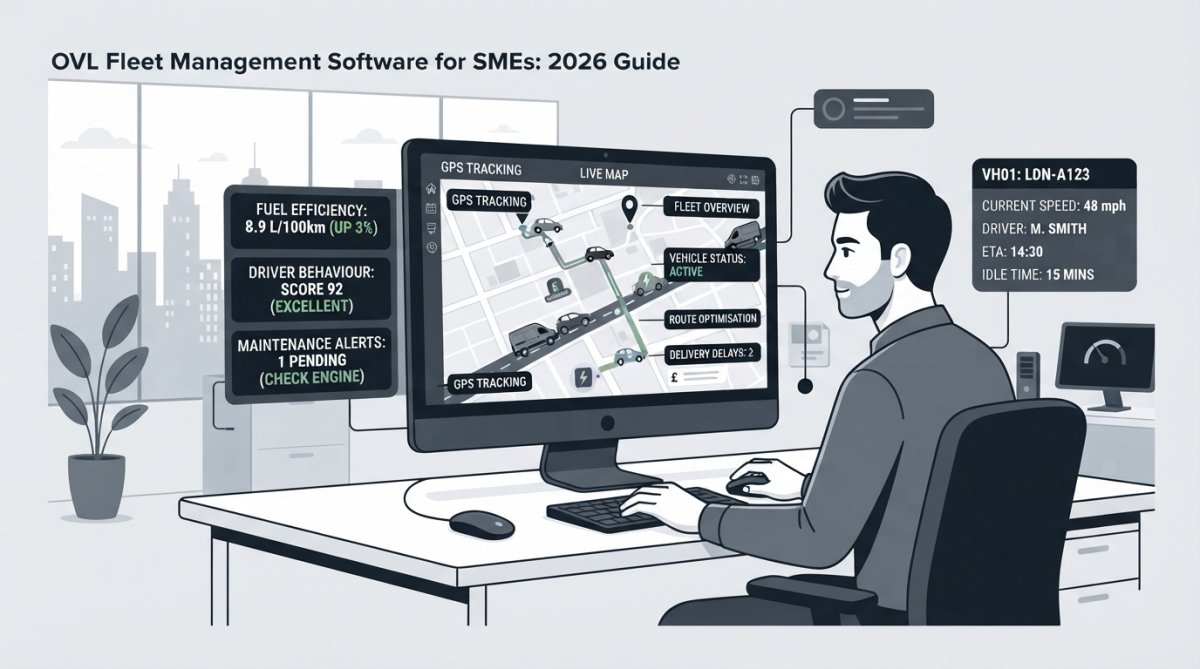
Real-time GPS tracking shows you exactly where every vehicle is, what speed it's travelling at, and how long it's been idle. This isn't just about theft prevention, it's about understanding operational efficiency. When a technician or delivery driver is delayed, you know immediately and can reassign work or notify customers in real time.
Quality tracking systems update positions every 1-2 minutes, not hourly. The difference matters. A system that updates every 10 minutes might miss a vehicle breakdown entirely. Real-time alerts notify you the moment a vehicle deviates from its planned route, sits idle for too long, or enters a geofenced area (such as a restricted zone or competitor's location).
Driver Behaviour Monitoring and Safety
Driver behaviour data transforms fleet management from reactive (fixing problems after they happen) to proactive (preventing them). The best systems track harsh braking, rapid acceleration, speeding, and cornering too fast. Each of these is a leading indicator of accident risk.
Many UK insurers now offer premium discounts of 5-15% if you can prove you're monitoring driver behaviour and acting on the data. That saving alone can justify the software investment. More importantly, safer driving reduces accident claims, vehicle damage, and liability exposure.
Maintenance Scheduling and Vehicle Diagnostics
Preventative maintenance is cheaper than emergency repairs. A system that tracks service intervals, MOT renewal dates, and vehicle health diagnostics catches problems before they strand a vehicle on the roadside. When a vehicle's engine management light comes on, diagnostic data can tell you whether it's a minor sensor issue or a serious problem requiring immediate attention.
HMRC compliance requires accurate maintenance records for tax purposes. A digital system automatically logs all work, parts, and costs, making tax reporting and whole-life cost analysis straightforward.
Fuel Management and Cost Control
Fuel typically represents 25-35% of total fleet operating costs. Tracking fuel consumption per vehicle and per driver reveals inefficiencies immediately. Unusual spikes often indicate mechanical problems (a clogged air filter increases fuel consumption by 10-15%) or poor driving habits (excessive idling, aggressive acceleration).
Integration with fuel cards provides automated transaction data, eliminating manual fuel log entry and catching fraudulent or personal fuel use instantly.
Fleet Management Software Pricing in the UK
Pricing varies significantly based on fleet size, feature depth, and contract length. Most UK providers use a per-vehicle-per-month subscription model, ranging from £7.99 to £60+ per vehicle monthly depending on features included.
Basic tracking-only solutions start around £7.99-£12 per vehicle per month. Mid-range platforms with driver behaviour monitoring, maintenance tracking, and compliance tools cost £15-£30 per vehicle monthly. Enterprise solutions with advanced telematics, AI dashcams, and predictive maintenance can exceed £40-£60 per vehicle per month.
For pricing specific to OVL Group's fleet management solutions and whole-life cost analysis, contact the team directly for a tailored quote based on your fleet size, vehicle types, and operational needs. OVL Group provides comprehensive cost breakdowns including finance, fuel, maintenance, insurance, and tax, not just software fees.
DVSA Compliance and Fleet Management Software
The Driver and Vehicle Standards Agency (DVSA) sets strict compliance requirements for fleet operators. Vehicles must pass regular safety inspections, drivers must hold valid licences, and maintenance records must be documented. Non-compliance can result in fines, vehicle impounding, or operator licences being suspended.
Best fleet management software for smes includes automated DVLA licence checks, MOT reminders, and safety inspection scheduling. When a driver's licence is due to expire or an MOT is approaching, the system alerts you automatically, no manual tracking required.
Some platforms integrate directly with DVSA systems to verify vehicle roadworthiness data and driver eligibility in real time. This eliminates the risk of deploying an uninsured or unlicensed driver.
HMRC Mileage Tracking and Tax Compliance
HMRC requires accurate mileage records for vehicle tax deductions, capital allowances, and salary sacrifice scheme administration. Manual mileage logs are error-prone and difficult to defend in a tax audit. Digital systems with GPS-verified mileage data provide an audit trail that HMRC accepts as evidence.
For salary sacrifice schemes (where employees lease vehicles through pre-tax salary deductions), HMRC compliance is non-negotiable. A system that automatically tracks business vs. personal mileage, fuel expenses, and maintenance costs simplifies year-end reporting and tax calculations.
OVL Group's FleetManagerPlus system includes HMRC-compliant reporting, making it straightforward to calculate taxable benefits and prepare annual compliance documentation.
How to Choose the Right Fleet Management Software for Your SME
Selecting the wrong system wastes time and money. The right choice depends on your specific operational needs, fleet size, and budget.
Assess Your Fleet Size and Operational Needs
A business with 5 vans has different requirements than one with 50. Smaller fleets benefit from simplicity and flat-rate pricing (pay one fee for up to 50 vehicles, not per-vehicle costs). Larger fleets need advanced analytics, custom reporting, and API integrations to connect with existing business systems.
Ask yourself: What's your biggest operational pain point right now? If it's fuel costs, prioritise fuel tracking and driver behaviour. If it's compliance and maintenance, focus on systems with strong DVSA integration and automated scheduling. If it's customer communication, choose a platform with real-time job dispatch and delivery proof.
Evaluate Integration Capabilities
Your fleet management system doesn't exist in isolation. It needs to talk to your accounting software, CRM, fuel card provider, and dispatch system. Weak integrations force manual data entry and create errors.
Check whether the platform offers API access, pre-built integrations with tools you already use, or a marketplace of third-party connections. Systems with open APIs are more flexible and future-proof.
Consider Total Cost of Ownership
Software cost is only one part of the picture. Factor in hardware (GPS devices, dashcams, OBD-II readers), installation, training, and the time required to migrate from your current system.
Some vendors bundle hardware with the subscription (simplifying costs but potentially locking you in). Others sell hardware separately, giving you flexibility to upgrade or swap devices independently. Calculate the true cost over 3 years, including all components, not just monthly software fees.
Migration from Spreadsheets to Software
Most SMEs we work with at OVL Group are coming from spreadsheet-based fleet tracking. The transition is simpler than it sounds, but it requires planning.
Start by auditing your current data: vehicle details, driver information, maintenance history, and fuel costs. Identify what's accurate and what's incomplete. Most systems can import historical data in bulk, but garbage data in means garbage insights out. Spend time cleaning your data before migration.
Next, involve your team early. Drivers and field managers often resist change because they don't understand the benefits. Show them how the system reduces paperwork, provides real-time job updates, and makes their work easier, not harder.
Finally, run both systems in parallel for 2-4 weeks. This overlap period lets you catch gaps, train staff, and build confidence before fully switching over.
Why SMEs Struggle Without Fleet Management Software
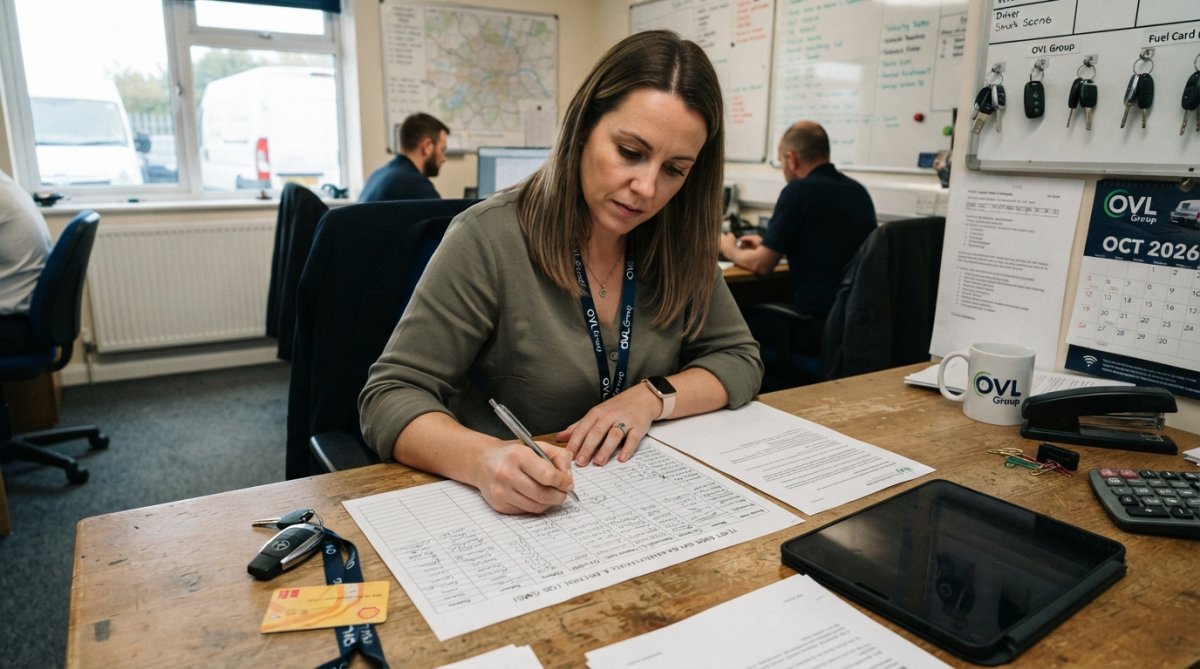
Operating without proper fleet management software creates cascading problems. Manual spreadsheets are error-prone, a mistyped mileage figure or forgotten maintenance date compounds into compliance issues and unexpected costs. When you don't have visibility into driver behaviour, fuel consumption, or vehicle health, you can't identify problems until they become expensive.
Compliance risk grows without automated tracking. HMRC audits are increasingly common, and businesses without digital records struggle to prove mileage, expenses, and business use. A single failed audit can result in substantial tax bills and penalties.
Staff turnover becomes painful. When fleet knowledge lives in one person's head or a disorganised spreadsheet, losing that person creates operational chaos. A proper system centralises knowledge and makes onboarding new staff faster.
Finally, you leave money on the table. Unmonitored fuel waste, unplanned breakdowns, and poor route planning each cost hundreds or thousands annually. A system that catches these issues pays for itself within months.
Making the Switch: Tailored Solutions for SME Fleets
The transition to fleet management software succeeds when it's tailored to your specific operation, not forced into a generic mould.
OVL Group's approach combines vehicle leasing expertise with fleet management support. Rather than selling you software and disappearing, our team works alongside you to understand your operational challenges, implement the right tools, and optimise your whole-life fleet costs. We analyse finance, fuel, maintenance, insurance, and tax together, not as separate line items.
For SMEs managing 5-200 vehicles, this integrated approach typically delivers:
- 10-15% reduction in fuel costs through driver behaviour coaching and route optimisation
- 20-30% fewer unplanned breakdowns via predictive maintenance
- Simplified HMRC compliance and tax reporting
- Better driver safety and reduced insurance claims
The key is choosing a partner who understands SME operations. Large enterprises have dedicated fleet managers and IT teams. SMEs need systems that are simple to use, don't require specialist knowledge, and integrate with existing business processes.
OVL Group's FleetManagerPlus system is built for this reality. It handles vehicle administration, compliance tracking, and cost analysis without requiring a dedicated fleet operations team. Dedicated account management means you have a real person to call when you need help, not a chatbot. If you're looking to optimise your fleet costs further, OVL Group also offers Vehicle Leasing Special Offers and [Van Leasing Special Offers](https://www.ovl.co.uk/van-leasing/special-offers) that can complement your fleet management strategy, alongside options for Electric / Hybrid Leasing if you're planning to transition towards greener vehicles.
Software Type | Best For | Key Advantage | Primary Cost |
|---|---|---|---|
Basic GPS tracking | 5-15 vehicles, cost-sensitive | Low price entry, simple interface | £7.99-£12/vehicle/month |
Mid-range (tracking + behaviour + maintenance) | 15-50 vehicles, compliance-focused | Balanced features and cost, DVSA integration | £15-£30/vehicle/month |
Enterprise (advanced telematics, AI dashcams) | 50+ vehicles, safety-critical operations | Comprehensive insights, predictive maintenance | £40-£60/vehicle/month |
Integrated leasing + fleet management | All sizes, whole-life cost focus | Finance, fuel, maintenance, tax in one place | Custom quote |
Choosing the best fleet management software for smes isn't about finding the cheapest option, it's about finding the right fit for your operation. The system should reduce administrative burden, improve compliance, and cut operational costs. If it does those three things, it pays for itself. OVL Group combines vehicle leasing expertise with fleet management tools to deliver whole-life cost optimisation and dedicated support. Speak with our team to discuss how we can help your fleet operate more efficiently and cost-effectively. HMRC guidance on vehicle tax and mileage records and DVSA fleet compliance requirements set the compliance standards your system must support. Get in touch with OVL Group today to explore tailored fleet solutions that match your business needs.
Frequently Asked Questions
What is fleet management software and why do SMEs need it?
Fleet management software is a digital platform that helps businesses track, manage, and optimise their vehicles and drivers. For SMEs, it provides real-time GPS tracking, maintenance scheduling, driver behaviour monitoring, and compliance reporting—all in one system. This eliminates manual spreadsheet tracking, reduces operational costs, improves safety, and ensures HMRC and DVSA compliance without requiring a large administrative team.
How much does fleet management software cost for UK SMEs?
Pricing varies significantly based on fleet size and features. Entry-level solutions start from around £7.99–£9.99 per vehicle per month, whilst more comprehensive platforms with advanced telematics and AI dashcams range from £15–£60 per vehicle monthly. Total cost of ownership also includes hardware, installation, and integration fees. For accurate pricing tailored to your specific needs, it's best to request a quote from providers based on your fleet size and requirements.
What are the essential features of fleet management software for SMEs?
Essential features include real-time GPS tracking, driver behaviour monitoring, maintenance scheduling, fuel management, vehicle diagnostics (OBD-II), DVSA licence compliance checks, MOT reminders, and HMRC-compliant reporting. Many SMEs also benefit from telematics integration, route optimisation, and mobile app access for on-the-go management. Choose software that matches your industry—for example, field services need different tools than logistics operations.
How can fleet management software help with HMRC compliance and tax reporting?
Fleet management software automates mileage tracking, fuel expenses, and maintenance records, generating HMRC-compliant reports for tax purposes. This is particularly important for salary sacrifice schemes and vehicle benefit declarations. The software logs all operational data in real-time, reducing audit risk and ensuring accurate records for HMRC inspections. Proper documentation also supports claims for capital allowances and operating expense deductions.