Table of Contents
- What Are Business Van Fleet Management Solutions?
- Why Fleet Management Matters for Van Operations
- Fleet Maintenance Management Best Practices
- How to Reduce Fleet Fuel Costs
- GPS Fleet Tracking for Small Business Vans
- Key Features of Effective Van Fleet Management Solutions
- Regulatory Compliance and Safety Standards
- Reducing Vehicle Downtime in Your Fleet
Business Van Fleet Management Solutions: 2026 Guide
Last Updated: June 28, 2026
What Are Business Van Fleet Management Solutions?
Business van fleet management solutions combine tools, systems, and strategies to track, maintain, and optimise commercial vehicle operations. Effective fleet management extends beyond knowing vehicle locations, it controls costs, reduces downtime, improves driver safety, and ensures regulatory compliance.
A comprehensive solution integrates real-time GPS tracking, maintenance scheduling, fuel monitoring, driver behaviour analytics, and compliance reporting into a single platform. This eliminates fragmented management through spreadsheets and manual paperwork.
Why Fleet Management Matters for Van Operations
Vans represent significant capital investments for small and medium-sized businesses. A single unplanned breakdown costs £500-£1,500 in lost productivity and emergency repairs. Preventative maintenance scheduling reduces unexpected downtime by 35-40% compared to reactive approaches.
Driver safety is critical in urban environments where collision risk is higher. Telematics systems monitoring harsh braking, speeding, and cornering patterns identify which drivers need coaching and which routes carry elevated risk.
Regulatory compliance adds another layer. DVIR requirements, MOT tracking, insurance documentation, and maintenance records must be current and auditable. A missed compliance deadline can result in fines or vehicles being taken off the road.
Fleet Maintenance Management Best Practices
Preventative Maintenance Scheduling
Preventative maintenance scheduling replaces guesswork with data-driven intervals based on manufacturer recommendations and actual vehicle usage patterns.
Effective programmes typically include oil and fluid changes every 10,000-15,000 miles, tyre rotation and pressure monitoring (underinflated tyres increase fuel consumption by 3-5%), brake inspection, battery health monitoring, and air filter replacement.
Vehicles on structured preventative maintenance schedules cost 20-25% less to operate over their lifecycle than those maintained reactively. You control when maintenance happens rather than maintenance controlling your schedule.
DVIR and Compliance Tracking
DVIR (Driver Vehicle Inspection Report) processes are mandatory under UK traffic law. Modern fleet management solutions automate DVIR collection through mobile apps where drivers photograph damage and note mechanical issues digitally.
The system creates work orders for identified problems, tracks resolution, and maintains audit trails for regulatory inspections. When traffic officers stop your vans, you can produce maintenance records and proof of timely repairs.
DVIR data reveals patterns, if one vehicle consistently shows brake issues or certain drivers report damage others don't, you can investigate and address root causes.
How to Reduce Fleet Fuel Costs
Fuel typically represents 25-35% of total fleet operating costs. Several mechanisms drive fuel savings:
Route optimisation reduces unnecessary mileage by 5-8%. Idle time elimination targets engines left running while stationary, telematics flag vehicles idling over 5 minutes. Driver behaviour coaching addresses acceleration and braking patterns, reducing fuel consumption by 8-12%. Vehicle maintenance keeps engines running efficiently, worn spark plugs increase consumption by 10-15%. Tyre pressure monitoring catches underinflation automatically, reducing fuel consumption by 3-5%.
Combining these approaches, fleet operators typically achieve 15-20% fuel cost reduction within the first year. For a business running 10 vans covering 30,000 miles annually, this translates to several thousand pounds in savings. If you're looking to optimise your fleet further, exploring Van Leasing Special Offers can help reduce overall vehicle acquisition and operating costs.
GPS Fleet Tracking for Small Business Vans
Real-time GPS tracking provides live visibility into vehicle locations, transmitting data every 30-60 seconds to a central platform.
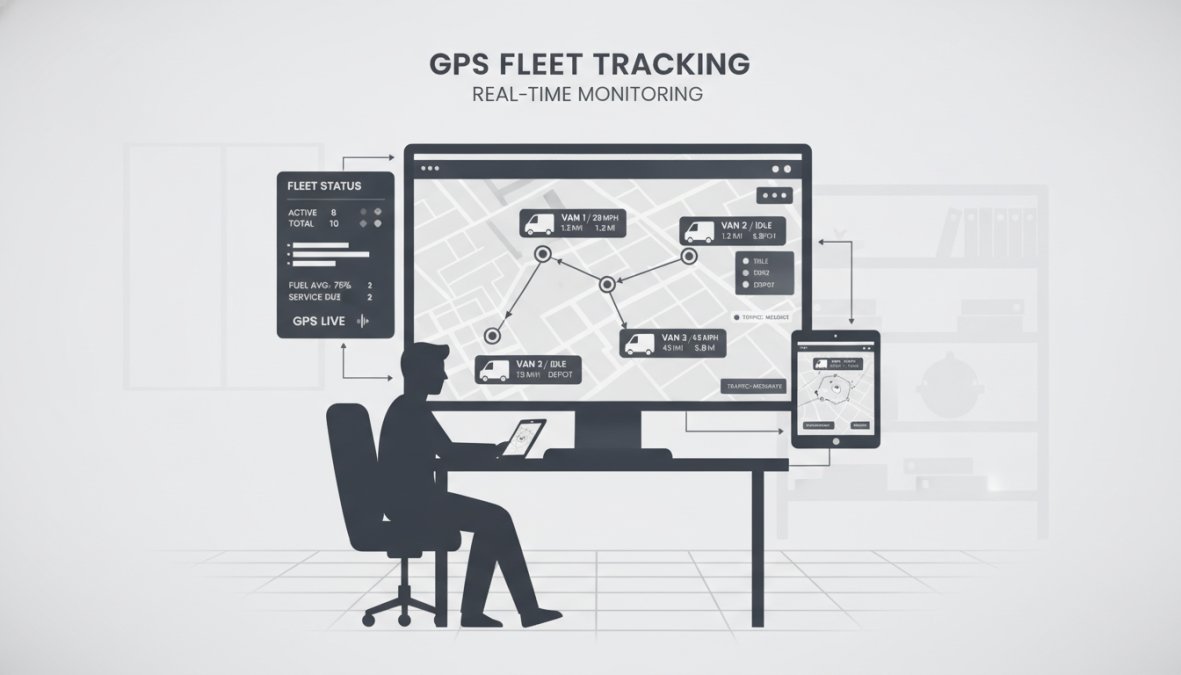
For small business van operations, GPS tracking delivers:
Customer communication improves, you provide accurate ETAs rather than guessing. Route efficiency becomes visible, allowing coaching toward better decisions. After-hours vehicle use can be monitored to prevent unauthorised use. Geofencing sets geographic boundaries with alerts when vans leave service areas. Historical data enables analysis of vehicle time allocation and route patterns.
Installation typically takes 30 minutes with no permanent vehicle modifications.
Key Features of Effective Van Fleet Management Solutions
Real-Time Monitoring and Telematics
Telematics provides continuous visibility into vehicle and driver performance, capturing location, speed, acceleration, harsh braking, engine diagnostics, fuel consumption, idle time, seatbelt usage, and door openings.
Data flows into dashboards highlighting exceptions: "Van 7 has been idling for 12 minutes", "Driver in Van 3 exceeded speed limit 8 times today", "Van 5 is reporting low oil pressure".
Real-time monitoring enables rapid emergency response with exact location coordinates.
Predictive Analytics and AI Integration
Predictive analytics forecast failures before they occur. A system might analyse battery voltage trends and determine failure within 7-10 days, allowing scheduled replacement rather than breakdown.
Predictive models identify drivers at elevated collision risk, enabling targeted coaching. AI route optimisation considers traffic patterns, driver preferences, vehicle capabilities, and delivery windows.
Driver Safety and Performance Management
Safety monitoring includes speed violations, harsh acceleration and braking, cornering speed, seatbelt usage, and mobile phone use. Real-time in-cab alerts notify drivers immediately when they exceed limits.
Performance management identifies drivers consuming less fuel and completing routes faster. Gamification elements create positive incentive structures.
Regulatory Compliance and Safety Standards
Fleet operations are governed by multiple regulatory frameworks. Your system must maintain auditable records satisfying regulatory inspections, including maintenance records, driver hours documentation, and vehicle inspection reports.
Insurance requirements typically include proof of regular maintenance, driver training records, and incident documentation. Many insurers offer premium discounts for telematics monitoring demonstrating measurable safety improvements.
Health and Safety at Work regulations place responsibility on business owners to ensure vehicles are safe and drivers are competent. Fleet management systems provide documentation demonstrating compliance.
Reducing Vehicle Downtime in Your Fleet
Vehicle downtime represents lost productivity and revenue. Several mechanisms reduce downtime:
Preventative maintenance catches problems before failure. Predictive diagnostics identify developing issues 1-2 weeks in advance. Maintenance scheduling batches work together, reducing total service visits. Spare parts inventory management ensures parts are on hand. Service provider coordination schedules maintenance at predetermined rates. Driver reporting catches minor issues early.
Well-managed fleets experience 25-30% less unplanned downtime than reactively managed fleets. For a 10-van business, this means 1-2 additional vehicles available for work daily.
Effective business van fleet management solutions combine visibility, analysis, and automation to transform operations. Whether managing 5 or 50 vans, the principles remain constant: know what's happening with your vehicles, maintain them proactively, coach drivers toward safe and efficient practices, and maintain compliance documentation.
OVL Group specialises in tailored vehicle leasing and fleet management solutions optimising fleet performance through comprehensive whole life cost analysis and dedicated account management. FleetManagerPlus simplifies fleet administration while our whole life cost approach, encompassing finance, fuel, SMR, insurance, and tax, ensures decisions based on complete operational data. We also offer Van Leasing Special Offers and Electric / Hybrid Leasing options to help businesses transition to more sustainable and cost-effective fleet solutions. Contact OVL Group to explore how tailored fleet leasing and management support can reduce operational costs and drive business growth.
| Maintenance Task | Frequency | Impact on Downtime |
|---|---|---|
| Oil and fluid changes | Every 10,000-15,000 miles | Prevents engine failure |
| Tyre rotation and pressure check | Every 6,000 miles | Improves fuel efficiency 3-5% |
| Brake inspection | Every 12,000 miles | Prevents safety failures |
| Battery health monitoring | Monthly | Catches degradation early |
| Air filter replacement | Every 15,000-20,000 miles | Maintains engine efficiency |
Frequently Asked Questions
What is included in van fleet management solutions?
Business van fleet management solutions typically include real-time GPS tracking, telematics data collection, preventative maintenance scheduling, driver safety monitoring, fuel management, compliance tracking, and asset utilisation reporting. Most systems integrate DVIR (Driver Vehicle Inspection Report) capabilities, maintenance logs, and analytics dashboards to provide comprehensive operational visibility. The best solutions also offer integration with fuel cards, repair order management, and vehicle lifecycle tracking to optimise total cost of ownership.
What are the benefits of GPS tracking for business vans?
GPS tracking for business vans provides real-time location visibility, enabling better dispatch and route optimisation. It improves driver accountability, enhances customer service through accurate ETAs, supports compliance with regulatory requirements, and deters theft or unauthorised use. GPS data also feeds into fuel management and driver behaviour analysis, helping identify safety risks and inefficiencies. For small businesses, GPS tracking offers operational efficiency gains without requiring significant capital investment in additional hardware.
How do I choose the best fleet management solution for business vans?
Evaluate solutions based on your fleet size, primary pain points (maintenance, fuel, compliance, or safety), and budget. Consider whether you need integrated telematics or prefer hardware-agnostic software. Assess ease of integration with existing systems, user interface simplicity, and quality of customer support. Look for solutions offering preventative maintenance automation, real-time monitoring, and compliance reporting relevant to your industry. Request trials or demos to ensure the platform meets your specific operational needs before committing.