
Table of Contents
- Understanding Your Fleet Costs: Fixed, Variable and Overhead
- Calculating Total Cost of Ownership for SME Fleets
- Step-by-Step: How to Optimize Fleet Budgets for SMEs
- Step 1: Conduct a Comprehensive Cost Audit
- Step 2: Implement Preventive Maintenance for Commercial Vehicles
- Step 3: Optimise Fuel Costs and Route Efficiency
- Step 4: Leverage Fleet Management Software for Small Businesses
- Step 5: Monitor Driver Behaviour and Provide Training
- Step 6: Review and Adjust Regularly
- Cost-Saving Strategies for SME Fleets: Practical Tactics
- Using a Fleet Budget Template for Small Business Planning
- Tax Implications and Deductions for SME Fleet Optimisation
- Conclusion: Taking Action on Fleet Budget Optimisation
Fleet Budget Optimization for SMEs: A Step-by-Step Guide
Last Updated: July 18, 2026
Learning to optimize fleet budgets for SMEs requires understanding where your money goes and making deliberate choices to improve efficiency. At OVL Group, we've helped hundreds of small and medium-sized businesses identify £10,000 to £50,000 in annual savings through structured cost analysis and operational improvements. This guide walks you through the exact process we use, from conducting a cost audit to implementing preventive maintenance, optimizing fuel efficiency, and using the right technology.
The challenge most SME fleet managers face is visibility. You're managing vehicles, drivers, maintenance, fuel, insurance, and compliance simultaneously, often without dedicated fleet software. Costs creep up, inefficiencies compound, and nobody can articulate why the budget keeps growing. Below, we'll show you exactly how to optimize fleet budgets for SMEs with practical, immediately actionable steps.
Understanding Your Fleet Costs: Fixed, Variable and Overhead
Your fleet budget sits on three pillars, and you can't optimize what you don't measure. Fixed costs remain constant regardless of miles driven. Variable costs fluctuate with usage. Overhead ties it all together.
Fixed Costs in Fleet Operations
Fixed costs hit your budget every month whether vehicles sit idle or run 24/7: lease payments, insurance premiums, road tax, and compliance certifications. For an SME fleet, fixed costs typically represent 40-50% of total spend.
Fixed costs don't respond to operational efficiency. You control them through acquisition decisions (lease vs. own), contract negotiation, and vehicle selection. A van with lower road tax and insurance premiums costs less to own, regardless of mileage.
Variable and Overhead Costs Explained
Variable costs scale with usage: fuel, maintenance repairs, tyres, and driver wages. A 20% increase in fleet miles typically drives a 15-20% increase in variable costs.
Fuel represents 25-35% of total fleet costs for most SMEs. Maintenance, tyres, and downtime matter equally. Overhead costs, fleet administration time, software subscriptions, training, compliance tracking, are often underestimated because they're distributed across staff time rather than appearing as single invoices.
Reducing variable costs through preventive maintenance increases fixed costs (more frequent planned servicing) but decreases emergency repair costs and downtime. The net effect is positive when you measure total cost of ownership.
Calculating Total Cost of Ownership for SME Fleets
Total cost of ownership (TCO) is the single metric that transforms fleet budgeting from guesswork into strategy. TCO includes every pound spent on a vehicle from acquisition through disposal: finance, insurance, fuel, maintenance, tyres, road tax, compliance, and downtime.
Many SME fleet managers focus on monthly lease payments or fuel spend because those are visible. TCO forces you to see the complete picture. A vehicle with lower monthly lease payment but higher fuel consumption and maintenance costs may cost 15-20% more in total than an alternative.
To calculate TCO for a vehicle over three years:
- Acquisition cost: lease payment × 36 months
- Insurance: annual premium × 3
- Fuel: average monthly consumption × fuel cost per litre × 36
- Maintenance: manufacturer's recommended servicing schedule plus estimated repairs
- Tyres: replacement frequency × tyre cost
- Road tax: annual rate × 3
- Compliance: MOT, safety checks, documentation
- Downtime cost: estimated hours in workshop × hourly operational cost
Divide the total by expected mileage to get cost per mile. This figure lets you compare vehicles fairly and identify which asset types deliver the best value.
Step-by-Step: How to Optimize Fleet Budgets for SMEs
The process of optimizing fleet budgets follows a logical sequence: start with visibility, implement operational improvements, then use technology to sustain gains.
Step 1: Conduct a Comprehensive Cost Audit
You can't optimize what you don't measure. A cost audit reveals where every pound goes and identifies your biggest cost drivers.
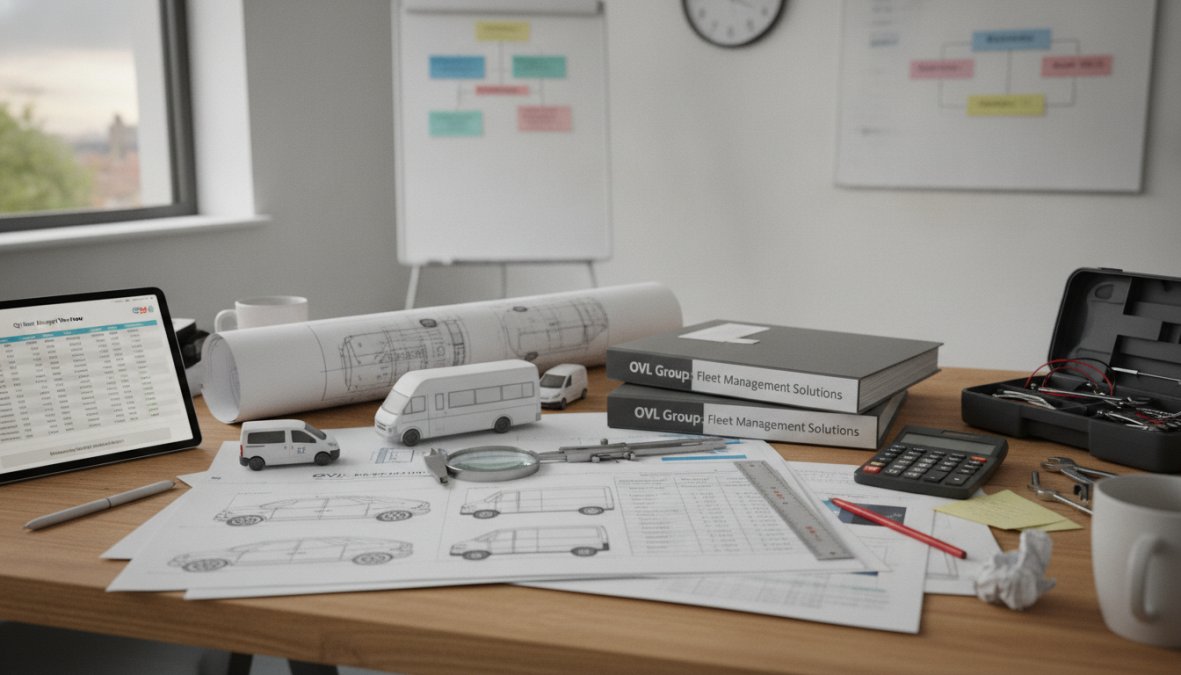
Gather three years of historical data if available: fuel receipts, maintenance invoices, insurance bills, road tax statements, and driver expense reports. Consolidate this data by vehicle, cost category, and time period.
Calculate your baseline metrics: total fleet spend (annual), cost per vehicle, cost per mile, fuel cost per litre, average maintenance cost per vehicle, insurance cost per vehicle, and downtime hours per vehicle. Compare your metrics against industry benchmarks. SME fleets typically spend £0.35-£0.55 per mile when all costs are included. Identify your top three cost drivers, typically fuel (25-35%), maintenance (20-30%), and insurance (15-20%), and prioritize these for optimization.
Step 2: Implement Preventive Maintenance for Commercial Vehicles
Preventive maintenance is the single highest-ROI investment in fleet budget optimization. Every pound spent on scheduled servicing saves £3-5 in emergency repairs, downtime, and vehicle replacement.
Establish a preventive maintenance programme: follow the manufacturer's service schedule (typically every 10,000-15,000 miles or annually), schedule servicing during planned downtime, track maintenance in a centralised system using fleet management software, and inspect for wear items proactively every 20,000 miles or quarterly. Document everything to prove asset care and support warranty claims.
A single emergency breakdown costs £500-2,000. Preventive servicing costs £150-300. The math is clear.
Step 3: Optimise Fuel Costs and Route Efficiency
Fuel optimization requires a systems approach. GPS-enabled route optimization software identifies the shortest, fastest, or most fuel-efficient route based on real-time traffic and vehicle characteristics, reducing mileage by 10-15%.
Driver behaviour dramatically affects fuel consumption. Aggressive acceleration, excessive idling, speeding, and poor gear selection increase fuel use by 15-25%. Implement driver training focused on smooth acceleration, steady speeds, and reducing idle time, paired with telematics for real-time feedback.
Fuel cards offer negotiated rates with fuel suppliers, typically 2-5% cheaper than pump prices, and provide detailed transaction data. Maintain proper tyre pressure (under-inflated tyres increase fuel consumption by 3-5%) and remove unnecessary weight from vehicles.
Step 4: Use Fleet Management Software for Small Businesses
Fleet management software transforms visibility into actionable insight. For SMEs, the right software reduces administrative overhead, prevents costly mistakes, and enables data-driven decisions.
Essential features for SME fleet software: GPS tracking and route optimization, maintenance scheduling, fuel monitoring, driver behaviour tracking, compliance management, and cost reporting. SMEs using fleet management software typically see 10-15% reduction in fuel costs, 20-30% reduction in unplanned maintenance, and 5-10 hours per week saved in administrative time.
Step 5: Monitor Driver Behaviour and Provide Training
Drivers are the most variable element in your fleet. The same vehicle driven by different drivers consumes 15-25% more or less fuel and experiences different maintenance costs.
Implement a driver safety and efficiency programme: establish clear driving standards, use telematics to measure performance, provide training for struggling drivers, create incentives for good performance, and hold regular safety briefings. Driver behaviour typically accounts for 15-20% of fleet operating costs.
Step 6: Review and Adjust Regularly
Fleet optimization is an ongoing discipline. Establish a monthly or quarterly review cadence: compare actual spend against budget, track fuel efficiency per vehicle and driver, review maintenance costs and downtime, and track KPIs against targets. Use these reviews to identify emerging issues before they become expensive problems.
Cost-Saving Strategies for SME Fleets: Practical Tactics
Beyond the structured optimization process, specific tactics deliver immediate savings.
Negotiating Fuel and Maintenance Contracts
Many SME fleet managers accept supplier pricing without negotiation, leaving money on the table.
Fuel card negotiation: Fuel card providers compete aggressively. Request a competitive quote; savings of 2-5% per litre are achievable, translating to £1,000-3,000 annually for a 10-vehicle fleet.
Maintenance contract negotiation: Request a fixed-rate servicing contract for your fleet. Typical discounts range from 10-20% for scheduled maintenance. Quality aftermarket parts deliver the same reliability at 20-30% lower cost.
Insurance negotiation: Provide your insurer with detailed claims history, driver training records, and telematics data showing safe driving behaviour. Some insurers offer 5-10% discounts for fleets using telematics and safety training programmes.
Vehicle Acquisition and Replacement Strategy
Vehicle acquisition decisions ripple through your budget for three to five years.
Lease vs. own: Leasing transfers maintenance risk to the leasing company and provides predictable monthly costs. For SMEs, leasing typically delivers better value because it eliminates unexpected repair risk and ensures vehicles are modern and fuel-efficient. Explore Vehicle Leasing Special Offers and Van Leasing Special Offers to compare competitive rates and find options that fit your budget.
Right-sizing your fleet: Audit your fleet use: how many miles does each vehicle cover weekly? If use is low, consider replacing two underutilized vehicles with one larger, more efficient vehicle, or use rental vehicles for peak periods instead of owning excess capacity.
Vehicle type selection: Match vehicle type to your actual requirements. Electric and hybrid vehicles are becoming cost-competitive for SME fleets, particularly for urban delivery or predictable daily routes. Fuel costs are significantly lower, maintenance is simpler, and tax incentives may apply.
Considering Electric Vehicles for Your SME Fleet
Electric vehicles are no longer niche. For SMEs with predictable daily routes and access to charging, they deliver measurable cost savings.
EV running costs are 50-70% lower than diesel equivalents. Electricity costs approximately £0.04-0.06 per mile compared to £0.12-0.15 per mile for diesel. Over three years, an EV typically costs 15-25% less to operate than a diesel van, though upfront cost is higher.
Most modern commercial EVs offer 100-150 miles per charge, which suits daily urban delivery but not long-distance routes. Assess your actual daily mileage. If 80% of your routes are under 100 miles, EVs are viable. The government provides grants and tax breaks for EV adoption by businesses; research current incentives before making acquisition decisions. OVL Group offers Electric / Hybrid Leasing and Lease Used Electric Vehicles options to help SMEs transition to lower-cost, sustainable fleet solutions.
Using a Fleet Budget Template for Small Business Planning
A budget template forces discipline. It requires you to estimate costs, track actuals, and measure variance.
Essential Components of an Effective Budget Template
| Cost Category | Estimated Annual | Actual Year-to-Date | Variance | Notes |
|---|---|---|---|---|
| Lease/loan payments | £X | £X | £X | [Vehicle count × monthly payment] |
| Insurance | £X | £X | £X | [Quoted annual premium] |
| Road tax | £X | £X | £X | [Annual rate × vehicle count] |
| Fuel | £X | £X | £X | [Estimated miles × £/mile] |
| Maintenance | £X | £X | £X | [Scheduled + contingency] |
| Tyres | £X | £X | £X | [Replacement frequency × cost] |
| Compliance | £X | £X | £X | [Annual per vehicle] |
| Administration | £X | £X | £X | [Software, training, time] |
| Total | £X | £X | £X |
Each month, update actual spend. When actual exceeds estimate, investigate why. Understanding variance is more valuable than the budget itself.
Common Mistakes to Avoid When Budgeting
Mistake 1: Underestimating maintenance. Budget 20-30% contingency above scheduled maintenance costs for unexpected repairs.
Mistake 2: Ignoring overhead. Include administration time, software subscriptions, and training in your budget.
Mistake 3: Treating fuel as the only variable cost. Budget for tyres, brakes, batteries, and other wear items separately.
Mistake 4: Not adjusting for inflation. Budget 3-5% annual increase for fuel prices, labour rates, and insurance premiums.
Mistake 5: Setting budgets without data. Use three years of historical data to establish realistic estimates.
Tax Implications and Deductions for SME Fleet Optimisation
Fleet-related expenses carry tax implications that many SME owners overlook.
Capital allowances: Vehicle purchases qualify for capital allowances, which reduce your taxable profit. The annual investment allowance (AIA) lets you deduct up to £1,000,000 of capital expenditure annually.
Revenue deductions: Operating costs, fuel, maintenance, insurance, road tax, are fully deductible as business expenses. Keep detailed records and receipts.
Salary sacrifice schemes: If you offer employees a salary sacrifice vehicle scheme, this is tax-efficient for both employer and employee.
VAT recovery: If your business is VAT-registered, you can recover VAT on vehicle purchases and operating costs, improving cash flow.
Mileage claims: If you use personal vehicles for business, you can claim mileage at the approved rate (currently 45p per mile for the first 10,000 miles, 25p thereafter).
Consult your accountant before making major fleet decisions to discuss tax implications and identify potential savings.
Fleet budget optimization isn't about cutting corners or compromising service. It's about understanding where your money goes and making deliberate choices that improve efficiency without sacrificing quality.
OVL Group specializes in helping SMEs optimize fleet performance through tailored vehicle leasing, whole life cost analysis, and FleetManagerPlus fleet management software. Our team provides dedicated account management and strategic planning support, helping you cut operational costs while maintaining service quality. Submit your fleet requirements today to discover how much you could save.
Key Optimization Strategies Summary
| Strategy | Timeframe | Impact | Priority |
|---|---|---|---|
| Conduct cost audit | 2-4 weeks | Identifies cost drivers | High |
| Implement preventive maintenance | Ongoing | Reduces emergency repairs by 60-70% | High |
| Optimize routes with GPS | 1-2 weeks | Reduces mileage by 10-15% | High |
| Deploy fleet management software | 4-6 weeks | Saves 5-10 hours admin time weekly | Medium |
| Driver training programme | 2-3 months | Improves fuel economy by 10-15% | Medium |
| Negotiate fuel and maintenance contracts | 2-4 weeks | Reduces costs by 5-15% | Medium |
| Evaluate vehicle acquisition strategy | Ongoing | Optimizes long-term costs | Medium |
| Consider electric vehicles | 2-3 months evaluation | Reduces fuel costs by 50-70% | Low-Medium |
External Sources:
According to Fleet Operator Recognition Scheme guidance, SME fleet operators who implement preventive maintenance programmes and driver training see measurable improvements in safety and cost efficiency. Society of Motor Manufacturers and Traders industry data confirms that commercial vehicle operating costs have increased 12-15% annually since 2024, making fleet optimization increasingly critical for SME profitability. Research from Institute of Directors business operations survey shows that SMEs investing in fleet management technology reduce administrative overhead by 25-35% whilst improving compliance accuracy.
Frequently Asked Questions
What are the main components of a fleet budget for SMEs?
A comprehensive fleet budget includes fixed costs (lease or loan payments, insurance premiums, vehicle registration), variable costs (fuel, maintenance, repairs), and overhead costs (administration, compliance). Total cost of ownership (TCO) combines all these elements. Many SMEs underestimate variable costs; tracking historical data helps forecast accurately. Using a fleet budget template ensures nothing is overlooked and enables better financial planning for operational efficiency.
How can fleet management software for small businesses reduce operational costs?
Fleet management software provides real-time GPS tracking, telematics data, and analytics that reveal inefficiencies in asset utilization, idling, and route planning. These systems track maintenance schedules, helping implement preventive maintenance and reduce costly downtime. Driver behaviour monitoring identifies unsafe practices that increase fuel consumption and insurance claims. Automated reporting saves administrative time, and historical data enables accurate forecasting of future costs and ROI calculations.
What is the Total Cost of Ownership (TCO) and why does it matter for SME fleet optimisation?
TCO encompasses all costs over a vehicle's lifetime: depreciation, fuel, maintenance, insurance, and compliance. Many SMEs focus only on monthly lease payments, missing the bigger financial picture. Understanding TCO helps compare leasing versus owning, evaluate electric vehicles against diesel alternatives, and justify investment in fleet management technology. It reveals the true cost of poor maintenance or inefficient driving, guiding strategic planning and budgeting decisions.
How does preventive maintenance help optimise fleet budgets?
Preventive maintenance for commercial vehicles reduces costly emergency repairs and unexpected downtime that disrupts operations. Scheduled servicing extends vehicle life, improves fuel efficiency, and ensures compliance with safety regulations. Computerized maintenance management systems (CMMS) track service intervals and alert administrators before issues occur. This proactive approach typically costs less than reactive repairs and keeps vehicles operational longer, improving return on investment and overall fleet performance.