Quick Summary
A fleet fuel card programme gives your drivers a way to pay for fuel without cash or personal money, while you track spending and set limits. To implement one in the UK, set clear goals, choose a provider with a suitable acceptance network, write a short policy and roll cards out in phases.
- Write down the goals first, such as controlling costs, cutting fraud or simplifying reporting.
- Check each provider's acceptance network on your main routes before you commit.
- Keep one-page policy covering authorised and prohibited purchases and reporting duties.
- Roll out in phases: pilot with 5 to 10 drivers, review, then batches of about a quarter of the fleet.
- Set a baseline of fuel spend per mile and exception rate, then track them monthly.
Table of Contents
- What a Fleet Fuel Card Programme Does for Your Business
- Setting Programme Goals and Defining Requirements
- Choosing Cards, Acceptance Networks and Providers
- Writing a Fleet Fuel Card Policy and Setting Controls
- HMRC Fuel Card Reporting Requirements
- Rolling Out Cards to Drivers: A Phased Timeline
- Best Practices for Fleet Fuel Management and Integrating Fuel Cards with Fleet Management Software
- Booking Your Fleet Review With OVL Group
- Frequently Asked Questions
Fleet Fuel Card Programme: How to Implement One in the UK
Last Updated: November 10, 2026
What a Fleet Fuel Card Programme Does for Your Business
A fleet fuel card programme gives your drivers a way to pay for fuel without cash or personal money. Fleet managers often use these programmes to track spending, set limits and cut admin. This guide walks you through how to implement one, step by step.
A fleet fuel card is a payment card linked to a specific vehicle or driver. It works only for the purchases you allow.
Here is what a programme typically handles:
- Fuel purchases at approved stations
- Spending limits per card or per week
- Transaction reports for every fill-up
- Blocked items like tobacco or snacks
The biggest win is visibility. You see where money goes, instead of chasing paper receipts at month end.
Watch out: Drivers often share cards to cover personal trips. Set clear rules and check transaction data each month.
Setting Programme Goals and Defining Requirements
Start by writing down what you want the programme to fix. Most fleets aim to control costs, cut fraud or simplify reporting.
Next, count your needs:
- Number of vehicles and drivers
- Monthly fuel volume across the fleet
- Where your vehicles travel most often
- Which vehicles need cards (vans, cars, pool vehicles)
Keep this list short and specific. It will guide every decision that follows.
Choosing Cards, Acceptance Networks and Providers
The acceptance network is the set of fuel stations that take the card. A wide network suits drivers who cover large areas. A narrow one may suffice for local routes.
When comparing providers, check:
- How many stations accept the card on your main routes
- What reporting tools come with the account
- How quickly a lost or stolen card can be blocked
- Whether the provider works with your accounting software
Ask each provider for a clear breakdown of fees before you commit. Pricing depends on your fleet size, fuel volume and the services you choose, so visit the OVL Group website or request a quote for current prices.
Writing a Fleet Fuel Card Policy and Setting Controls
A written policy stops confusion before it starts. Keep it to one page where possible.
Cover these points:
- Authorised purchases: fuel, and in some cases essential items such as screenwash
- Prohibited purchases: personal goods, alcohol, cigarettes
- Reporting duties: when and how drivers flag a lost card or a mistake
- Consequences: what happens if the policy is broken
Then set the controls in the card system. Limit fuel by vehicle type, block non-fuel categories and set alerts for unusual spend.
HMRC Fuel Card Reporting Requirements
For VAT and tax, keep every fuel receipt and transaction record. HMRC expects businesses to hold records that prove each purchase was for business use (Record keeping (VAT Notice 700/21)).
Your fuel card reports should show:
- The date, location and amount of each transaction
- The vehicle and driver linked to the purchase
- VAT details where you can reclaim them
Check the current rules on the official GOV.UK guidance on VAT and business records before you finalise your process. Confirm your own treatment with your accountant, as tax rules can change.
Rolling Out Cards to Drivers: A Phased Timeline
A phased launch reduces problems. A staged rollout lets you find policy gaps while they are cheap to fix, before they spread across the whole fleet.
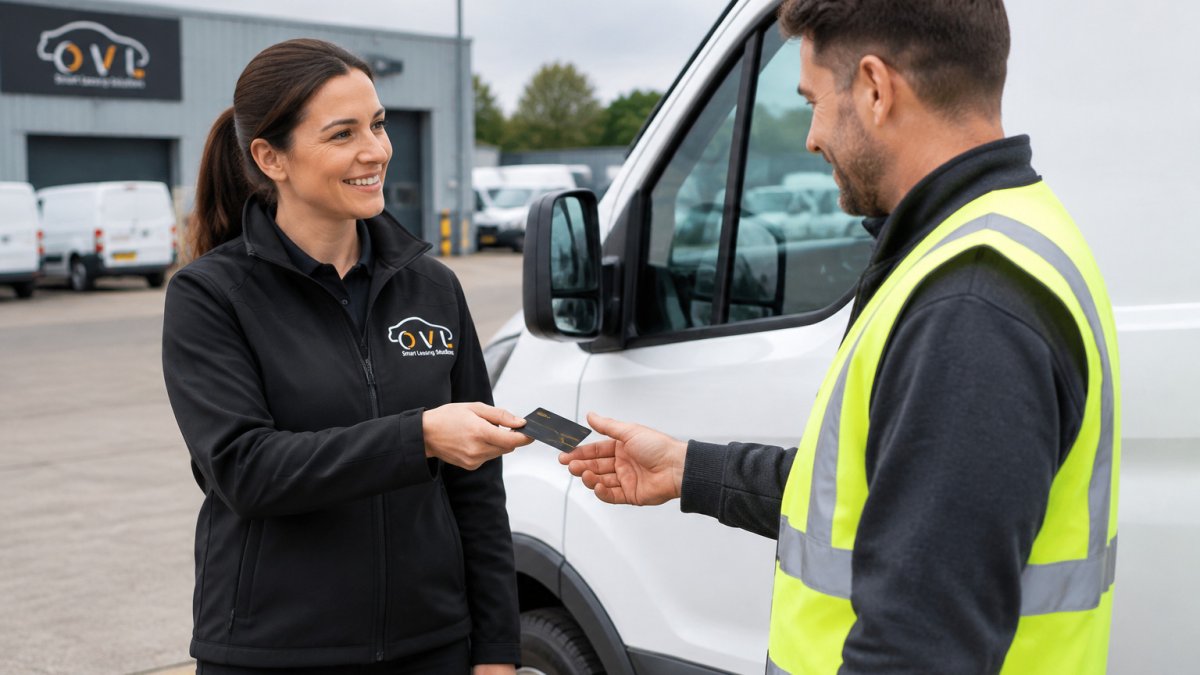
The table below sets out a practical nine-week plan with a named owner for each stage. Adjust the durations to suit your fleet size, but keep the order of the stages.
| Phase | Weeks | Owner | Key activity | Launch check before moving on |
|---|---|---|---|---|
| Preparation | Week 0 | Fleet manager with finance | Confirm provider, set card limits, load vehicle and driver records | Every card is mapped to one vehicle and one named driver |
| Pilot | Weeks 1-2 | Fleet manager | Issue cards to 5 to 10 drivers on routine routes | Pilot drivers have completed a short briefing and have used the card at least three times |
| Review | Weeks 3-4 | Fleet manager and finance | Check transaction reports, flag unusual spend, update the policy | No unexplained transactions remain open |
| Batch rollout | Weeks 5-8 | Fleet manager, with a team lead per depot | Issue cards in batches of roughly a quarter of the fleet | Each batch has been briefed before its cards are activated |
| Steady state | Week 9 onward | Finance | Monthly reconciliation and quarterly limit reviews | Reconciliation completes within an agreed number of working days |
Preparation matters most. Before any card leaves the office, decide who can request a new card, who approves a limit change and who is the first point of contact when a card is declined. Write these names down.
!A fleet manager handing a fuel card to a van driver beside a white commercial van in a UK depot yard
Hold a short briefing for each batch rather than sending a memo. Explain the policy, show how to enter the card at the pump, and say who to call if a card is declined or a station refuses it.
Watch out: A pilot group chosen only from your most careful drivers will tell you little about how the policy behaves across the wider fleet.
Contingency checks to run during the pilot:
- Test what happens when a card is declined at a station outside your usual acceptance network
- Confirm how a replacement card is issued and how quickly it arrives at a depot
- Agree an emergency purchase route for a vehicle stranded with an empty tank, and record who authorises it
- Check that a lost card can be blocked the same day through the provider's reporting channel
Plan the pilot around the routes your drivers actually take. Rural lanes often have fewer acceptance points than motorway corridors, so a driver's first fill-up on those routes is a useful test of the network you have chosen.
Best Practices for Fleet Fuel Management and Integrating Fuel Cards with Fleet Management Software
Good fuel management is a routine, not a project. The difficulty is that most fleets never measure the programme before they change it, so they cannot tell whether a new policy helped. Setting a baseline before you roll out cards, then tracking the same measures each month, is the simplest way to prove the programme works.
Measure the programme against a baseline
Record these figures for the three months before launch, then track them monthly:
- Fuel spend per mile for each vehicle group, so vans and cars are compared with their own kind
- Litres per vehicle over the same period, to separate price changes from usage changes
- Exception rate, meaning the share of transactions that need a query, such as a fill-up outside working hours or a purchase in a non-fuel category
- Reconciliation time, the hours your finance team spends matching card data to invoices each month
A falling exception rate usually shows that drivers have understood the policy. A falling reconciliation time shows the provider's reporting is doing its job. If fuel spend per mile does not move after three months, look at route planning and vehicle maintenance before blaming the card.
Integrating fuel data with your fleet management software
Where your fleet management system receives fuel transactions automatically, you can compare fuel use with mileage and service history in one view. This makes unusual patterns easy to see: a vehicle filling up more often than its odometer readings justify, or a fuel economy figure that drops sharply after a service.
Before you buy, ask your provider three practical questions:
- Does the data arrive as a file import, a live feed or an API connection, and how often is it updated?
- Can transactions be matched to a vehicle registration automatically, or does someone need to do this by hand?
- What happens to the data if you change fleet management system later?
The last question is the one most often overlooked. Fuel history is valuable for several years, particularly for VAT and for comparing vehicle performance, so confirm you can export it in a usable format.
Keep data access and driver privacy in view
Transaction data can reveal where a driver has been and when. Decide in advance who can see location-linked fuel records, how long you will keep them, and how drivers will be told. Set these rules in writing and share them with drivers during onboarding. Clear rules protect both the business and the people driving its vehicles.
Monthly and quarterly routine
- Each month: reconcile card data against your accounts and review exceptions
- Each month: compare fuel use per vehicle with the previous month and the baseline
- Each quarter: review spending limits and adjust those that no longer match the work
- When a driver leaves: remove their card the same day and confirm the removal in the provider's system
A short monthly summary for the fleet owner, covering the four baseline measures and any open exceptions, is usually enough to keep the programme on track without adding a heavy reporting burden.
Booking Your Fleet Review With OVL Group
Setting up a fuel card programme touches many parts of your fleet, from vehicle choice to driver rules. If you are reviewing your fleet at the same time, our team at OVL Group can help you plan both. We work with cars, electric vehicles, vans and minibuses, and we look at the whole life cost of each vehicle, including fuel. You can also explore our vehicle leasing special offers to compare options for your fleet.
Frequently Asked Questions
What are the benefits of using fuel cards for UK business fleets?
A fleet fuel card gives drivers a way to pay for fuel without cash or personal expenses, and gives the fleet manager a record of every transaction. Most programmes report better cost control because spending limits and purchase rules are applied at the point of sale. Fuel transaction data also feeds into expense management and accounting, which reduces time spent reconciling receipts. The exact savings depend on fleet size, fuel volumes and how strictly the policy is enforced, so the baseline KPIs you record before rollout are the best way to measure them for your own business.
How do I choose the right fuel card provider for my fleet?
Start with your acceptance network: check that the stations your drivers actually use accept the card, including motorway service areas and supermarket forecourts in your operating area. Compare reporting formats, how the provider integrates with your accounting or fleet management software, and how quickly cards can be replaced if lost. Ask for clear information on fees, but compare them on the total cost to your business rather than on headline figures. Shortlist two or three providers and request a demonstration of the reports you will use each month.
How can fuel cards help with HMRC fuel card reporting?
Fuel cards produce transaction records that show the date, location, vehicle or driver and the amount spent, which supports the records you need to keep for HMRC. Accurate records help you apply the correct treatment for fuel provided for company cars and vans and avoid errors in your returns. Agree with your accountant which records they need and how long they must be kept, and confirm the position for each vehicle type in your fleet. This article covers the practical records only and does not replace professional tax advice.
What is the process for rolling out fuel cards to drivers?
Roll out in phases: confirm your goals and policy, issue cards to a pilot group, then extend to the full fleet once the process runs smoothly. Give each driver a short briefing on the policy, what the card may and may not be used for, and how to report a lost or faulty card. Set a single point of contact for questions and card problems. Review the first month of transaction data with the pilot group, correct any gaps in the policy, and only then move the rest of the fleet onto the programme.