Table of Contents
- Why a Fleet Maintenance Checklist Matters
- Daily Walkaround Check Requirements
- DVSA Vehicle Maintenance Standards and Your Checklist
- Building Your Fleet Preventive Maintenance Schedule Template
- Fleet Maintenance Software Benefits and Digital Implementation
- Categorising Fleet Assets by Usage and Maintenance Needs
- Tracking Service History and Managing Fleet Compliance
- Reducing Vehicle Downtime Through Preventive Action
Last Updated: August 24, 2026
Why a Fleet Maintenance Checklist Matters
A fleet maintenance checklist is a structured tool that documents all routine inspection and service tasks required to keep vehicles roadworthy, safe, and compliant with regulations. For fleet managers overseeing 50+ vehicles, this checklist becomes the backbone of operational efficiency and risk management.
The difference between fleets that run smoothly and those drowning in downtime often comes down to one thing: whether maintenance is planned or reactive. A well-designed checklist shifts your operation from firefighting to prevention. When vehicles break down unexpectedly, you lose productivity, incur emergency repair costs, and risk safety incidents. When you catch problems early through systematic checks, you avoid those cascades entirely.
Teams that implement a structured checklist approach often see measurable improvements in vehicle availability and cost control. The checklist itself isn't complicated, but the discipline to use it consistently is where most operations stumble.
This guide walks you through building a practical fleet maintenance checklist that integrates daily walkarounds, preventive maintenance schedules, compliance tracking, and digital management. By the end, you'll have a framework you can implement immediately across your operation.
Daily Walkaround Check Requirements
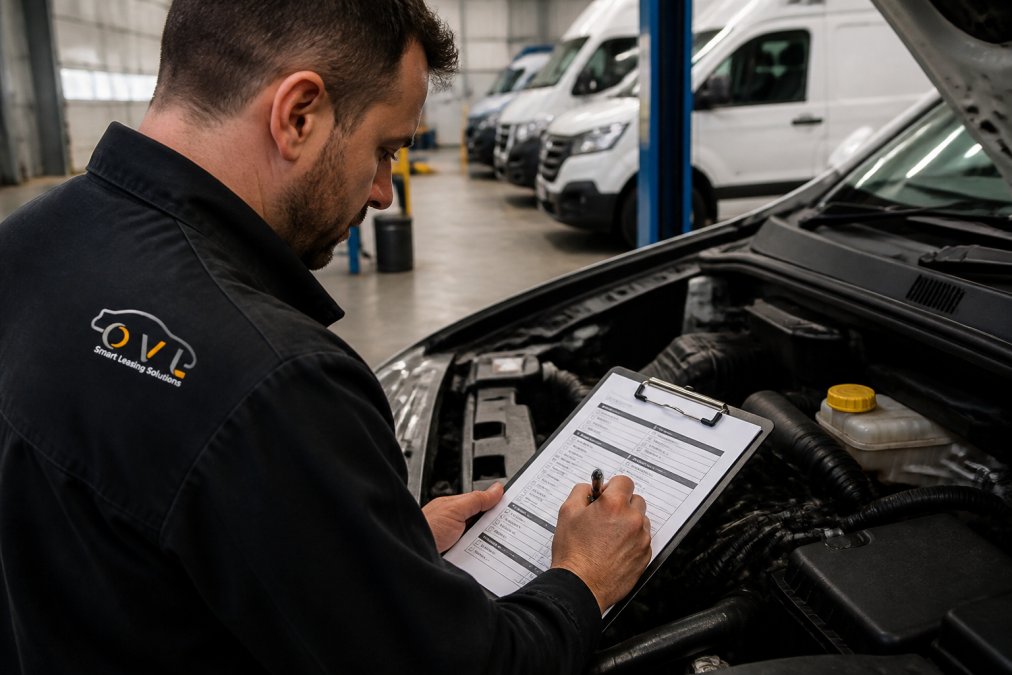
Daily vehicle inspections catch problems before they become failures. A walkaround check takes 10-15 minutes per vehicle and should happen before the first journey of the day (gov.uk). This is where your drivers become your first line of defence.
Exterior inspection points
Start with what's visible from the outside. Your checklist should include:
- Tyres: Check pressure visually (look for obvious bulging or deflation), inspect for cuts, cracks, or embedded objects, and verify tread depth is above 1.6mm across the width (gov.uk). Uneven wear patterns signal alignment issues.
- Lights and reflectors: Walk around the vehicle and confirm all headlights, tail lights, brake lights, indicators, and reflectors are intact and functioning. A broken light is both a safety hazard and a compliance violation.
- Bodywork and mirrors: Look for dents, loose panels, or damage that could worsen during the day. Check both wing mirrors are secure and not cracked.
- Windscreen and windows: Inspect for chips or cracks that obstruct vision or could fail under stress.
- Fluid leaks: Look under the vehicle for any pooling oil, coolant, brake fluid, or other liquids. A fresh leak needs investigation before the vehicle moves.

Interior and safety systems
Once you've checked the exterior, move inside.
- Seatbelts and seats: Verify all seatbelts are present, not frayed, and function correctly. Seats should be secure and undamaged.
- Dashboard warning lights: Before starting the engine, check the instrument cluster. Any illuminated warning lights need to be documented and investigated.
- Brakes and steering: After starting, gently test the brake pedal for firmness and responsiveness. Check steering isn't stiff or unresponsive.
- Horn and wipers: Confirm both work. A non-functional horn is a safety issue.
- Emergency equipment: Verify the vehicle carries a warning triangle, high-visibility vest, and first aid kit as required.
Drivers should record findings on a simple form or digital app. Any fault discovered during the walkaround must be logged immediately, never send a vehicle out with a known defect.
DVSA Vehicle Maintenance Standards and Your Checklist
The Driver and Vehicle Standards Agency (DVSA) sets the regulatory framework for vehicle maintenance in the UK. Compliance isn't optional; it's a legal requirement that protects your operation from enforcement action and liability.
The DVSA's statutory guidance emphasises that operators are responsible for ensuring all vehicles are maintained in a safe condition (gov.uk). This applies to all vans, minibuses, and commercial vehicles in your fleet. Regular maintenance isn't just good practice, it's a legal obligation under road traffic law.
Your checklist must align with DVSA standards by covering:
- Braking systems: Brake pads, discs, fluid condition, and system responsiveness must be checked at defined intervals.
- Steering and suspension: These components directly affect vehicle control and must be inspected regularly.
- Lighting and visibility: All lights, reflectors, and wipers must function correctly.
- Tyres: Pressure, tread depth, and condition are critical safety factors.
- Engine and emissions: Oil, coolant, and air filter condition must be monitored.
When you build your fleet maintenance checklist, reference the DVSA's guidance to ensure your intervals and inspection points meet regulatory requirements. This protects both your vehicles and your legal standing.
Building Your Fleet Preventive Maintenance Schedule Template
Preventive maintenance is where you stop problems before they start. Unlike daily walkarounds, which catch immediate issues, a preventive schedule addresses wear and degradation over longer timescales.
Weekly and monthly maintenance tasks
Weekly tasks are quick checks that take 30 minutes or less:
- Fluid levels: Check oil, coolant, brake fluid, and washer fluid. Top up as needed.
- Tyre pressure and condition: Verify all tyres are at manufacturer-recommended pressure and show no new damage.
- Lights and wipers: Reconfirm all lights work and wiper blades aren't streaking.
- Belts and hoses: Look for cracks, fraying, or loose connections.
Monthly checks go deeper:
- Battery condition: Check terminals for corrosion and verify the battery is secure.
- Brake pad wear: Inspect pads visually; many vehicles allow this without removing wheels.
- Fluid leaks: Check under the vehicle for any new seepage.
- Air filter condition: A clogged filter reduces efficiency and should be replaced if visibly dirty.
Quarterly and annual service intervals
Quarterly tasks (every 3 months) include:
- Full fluid inspection: Oil, transmission fluid, differential fluid, and coolant concentration.
- Suspension and steering: Inspect for play, wear, or damage.
- Exhaust system: Check for rust, loose hangers, or damage.
- Windscreen wipers and seals: Replace wiper blades if worn; check door seals for cracking.
Annual servicing is where you address major wear items:
- Oil and filter change: Essential for engine longevity.
- Brake system overhaul: Inspect pads, discs, and fluid; replace as needed.
- Coolant flush: Prevents corrosion and maintains cooling efficiency.
- Transmission fluid inspection: Check level and condition.
- Suspension and steering components: Full inspection and replacement of worn parts.
- Tyres: Assess remaining tread life and replace if approaching 2mm depth.
Document every service completed. This creates a service history that proves compliance and supports resale value.
Fleet Maintenance Software Benefits and Digital Implementation
Digital fleet maintenance software transforms how you track, schedule, and manage maintenance across your entire operation. Instead of scattered spreadsheets and paper forms, a centralised system gives you visibility into every vehicle's status.

The benefits are concrete:
- Automated scheduling: The system reminds you when vehicles are due for service, eliminating missed intervals.
- Real-time compliance tracking: You can verify at any moment that your fleet meets DVSA standards.
- Reduced downtime: Planned maintenance happens during scheduled windows, not emergencies.
- Cost visibility: Track spending per vehicle and identify patterns (e.g., one van consistently costs more to maintain).
- Audit trail: Every service, inspection, and repair is logged with dates and technician details. This protects you if regulators ask questions.
When selecting software, prioritise systems that integrate with telematics data. If your vehicles have GPS and diagnostic sensors, linking that data to maintenance records gives you predictive insights. For example, if a vehicle's fuel consumption suddenly drops, the system can flag a potential engine issue before it becomes critical.
OVL Group supports fleet operators in integrating maintenance management with broader whole life cost analysis. When you combine maintenance tracking with fuel consumption data, insurance costs, and depreciation patterns, you can make informed decisions about which vehicles to replace or repair. Explore Vehicle Leasing Special Offers and Van Leasing Special Offers to see how structured leasing arrangements can align with your maintenance and replacement cycles.
Implementation is straightforward. Start by uploading your current fleet roster and existing service records. Assign drivers or technicians to log daily walkarounds through a mobile app. Set up automatic alerts for upcoming services. Within weeks, you'll have a complete picture of your fleet's health and compliance status.
Categorising Fleet Assets by Usage and Maintenance Needs
Not all vehicles in your fleet have the same maintenance requirements. A van used for daily local deliveries experiences different wear patterns than one used for occasional long-distance trips. Your checklist should reflect these differences.
Categorise your fleet by:
- Usage intensity: High-use vehicles (daily operation, 30,000+ miles per year) need more frequent checks. Low-use vehicles (occasional use, under 10,000 miles per year) can follow extended intervals.
- Vehicle type: Vans, minibuses, and cars have different critical components. A minibus carrying passengers has stricter braking and suspension requirements than a van.
- Age and condition: Newer vehicles may need less frequent inspections. Older vehicles approaching end-of-life might benefit from more frequent checks to catch emerging issues.
- Operating environment: Vehicles used in rural areas with poor road surfaces may need more frequent suspension and tyre checks than those in urban environments.
Create a maintenance matrix that maps each category to its specific checklist and service intervals. This ensures you're not over-servicing newer vehicles or under-servicing older ones.
Tracking Service History and Managing Fleet Compliance
Service history is your proof of compliance. Every oil change, brake inspection, and repair must be recorded with the date, mileage, work performed, and technician name.
Maintain records for:
- Scheduled services: Oil changes, fluid top-ups, filter replacements.
- Repairs: Any defect found and corrected, including the root cause.
- Inspections: Daily walkarounds, pre-journey checks, and compliance audits.
- MOT results: Keep copies of MOT certificates and any advisories.
- Recalls: Document any manufacturer recalls and remedial work completed.
Store records digitally and retain them for at least 6 years. This protects you if a regulator or insurer asks for evidence of maintenance. It also supports insurance claims and helps you defend your operation if an incident occurs.
Compliance tracking should include:
- Regulatory deadlines: MOT dates, emission testing, and safety inspections.
- Insurance requirements: Some policies mandate specific maintenance intervals.
- Manufacturer recommendations: These are documented in your vehicle handbooks and should be treated as minimum standards.
Reducing Vehicle Downtime Through Preventive Action
Downtime costs money. Every hour a vehicle is off the road is an hour you're not generating revenue. Preventive maintenance directly reduces downtime by catching problems before they force a vehicle into the workshop.
A typical reactive approach looks like this: vehicle fails, driver reports it, you arrange a repair, the vehicle sits idle for days, repair costs are high because the failure cascaded. A preventive approach looks different: scheduled service happens during planned downtime, minor wear items are replaced before they fail, vehicle is back in service on schedule.
The financial impact is significant. Consider a van in your fleet. If that van breaks down unexpectedly, you might lose 3-5 days of operational capacity while waiting for repairs. The cost of an emergency repair is typically higher than a planned service. Over a year, one unexpected failure can cost more than several planned preventive services.
Preventive maintenance also extends vehicle lifecycle. Regular oil changes, brake servicing, and suspension checks slow the rate of wear, keeping vehicles roadworthy longer. This improves your whole life cost position, the total cost of owning and operating a vehicle from purchase to disposal.
To minimise downtime, schedule preventive services during off-peak periods. If your fleet operates Monday to Friday, book services for Friday afternoons or Saturdays. Rotate vehicles so you never have more than one or two in the workshop at once. Communicate schedules to drivers in advance so they can plan their workload.
A fleet maintenance checklist is the foundation of operational excellence. It shifts your mindset from reacting to problems to preventing them. By implementing daily walkarounds, following DVSA standards, maintaining a preventive schedule, and tracking everything digitally, you create an operation that runs predictably and efficiently.
The challenge isn't building the checklist, it's maintaining the discipline to use it consistently. Start with a simple template, train your team, and refine based on what you learn. Within months, you'll see measurable improvements in vehicle availability, compliance confidence, and cost control.
OVL Group supports fleet operators in implementing maintenance programmes that integrate with broader fleet management and whole life cost analysis. If you're managing a growing fleet and need guidance on structuring your maintenance operation for compliance and efficiency, our team can help you build a framework tailored to your specific needs. Explore our Electric / Hybrid Leasing and Lease Used Electric Vehicles options to see how modern vehicle solutions can complement your maintenance strategy and reduce long-term operational costs.
Frequently Asked Questions
Q: What should be included in a daily vehicle walkaround check?
A: A daily walkaround check should cover external condition (tyres, lights, mirrors, bodywork), fluid levels (oil, coolant, brake fluid), and warning lights on the dashboard. Check that all doors lock properly, wipers work, and there are no visible leaks beneath the vehicle. This routine inspection takes 5-10 minutes but catches issues early, reducing unexpected breakdowns and supporting compliance with DVSA vehicle maintenance standards.
Q: How often should fleet vehicles undergo preventive maintenance?
A: Most vehicles require oil changes and tyre rotations at intervals depending on manufacturer guidance. Brake fluid and coolant checks should happen quarterly. A structured fleet preventive maintenance schedule template ensures no task is missed, reducing repair costs and extending vehicle lifecycle while maintaining operational efficiency.
Q: What are the legal requirements for fleet maintenance under DVSA guidelines?
A: The Driver and Vehicle Standards Agency (DVSA) requires operators to maintain vehicles in a roadworthy condition. Fleet operators must keep maintenance records, conduct regular safety inspections, and ensure compliance with MOT standards. Vehicles must be checked for defects that could affect safety, such as brake performance, steering, and lighting. Non-compliance can result in enforcement action and vehicle prohibition notices.
Q: How can fleet maintenance software improve compliance and reduce downtime?
A: Fleet maintenance software benefits include automated scheduling, real-time alerts for overdue services, and centralised service history tracking. Digital systems reduce paperwork, prevent missed maintenance windows, and provide audit trails for compliance verification. Integration with telematics data enables predictive maintenance, identifying issues before they cause breakdowns. This visibility cuts unplanned downtime and operational disruption while improving safety standards across your fleet.