Table of Contents
- Why Fleet Performance Matters as You Scale
- Whole Life Cost Analysis for Business Fleets
- Real-Time Telematics and GPS Tracking for Operational Efficiency
- Preventative Maintenance and Vehicle Diagnostics
- Reducing Minibus Insurance Costs for Businesses
- Salary Sacrifice Schemes for Company Cars and Electric Vehicles
- Fleet Electrification and Sustainability for Long-Term Growth
- Regulatory Compliance and Automated Reporting
Last Updated: August 29, 2026
Why Fleet Performance Matters as You Scale
As your business grows, your fleet becomes either a competitive advantage or an operational bottleneck. The difference between a well-managed fleet and a struggling one isn't just about vehicle availability, it directly affects your bottom line, your team's safety, and your ability to win new contracts.
Growing businesses often underestimate how quickly fleet costs spiral. A single van that's poorly maintained, inefficiently routed, or over-fuelled can drain thousands of pounds annually. Multiply that across 50, 80, or 150 vehicles, and you're looking at the difference between profit and loss. At OVL Group, we've worked with field service companies and domiciliary care providers who discovered they were losing more to fleet inefficiency than they were spending on salaries.
The challenge intensifies when you're managing fleets across multiple regions. Compliance becomes harder. Driver behaviour becomes harder to monitor. Maintenance schedules slip. Insurance claims rise. Without the right systems and strategy, scaling your fleet means scaling your problems.
This is where optimise fleet performance becomes non-negotiable. It's not about cutting corners or squeezing more from less. It's about making deliberate, data-driven decisions that reduce waste, improve safety, and create room for growth.
Whole Life Cost Analysis for Business Fleets
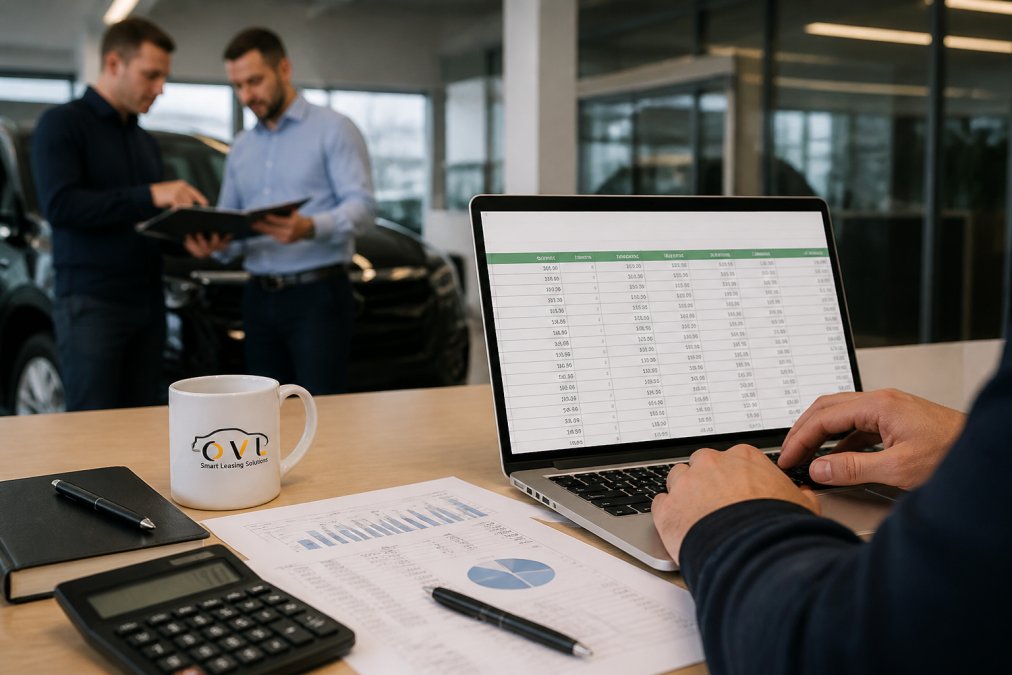
Whole life cost analysis is the most underused tool in fleet management. Most finance directors focus solely on monthly lease payments because that's what appears in the P&L. But the real cost of ownership extends far beyond the rental figure.
A whole life cost analysis captures everything: acquisition costs, fuel consumption, maintenance and repair, insurance, tax implications, and residual value at end of life. When you factor in all of these, the cheapest monthly payment often becomes the most expensive vehicle to operate overall.
Consider two vans with different acquisition costs. Van A costs less to lease monthly but consumes more fuel, requires frequent repairs, and attracts higher insurance premiums. Van B costs more upfront but runs efficiently, needs minimal maintenance, and qualifies for better insurance rates. Over a three-year contract, Van B delivers significantly lower total cost of ownership, but only if you analyse the full picture.
OVL Group specialises in this analysis. Rather than recommending vehicles based on headline lease rates, we model the complete financial impact across the contract term. This approach has helped clients reduce fleet operating costs by identifying which vehicles genuinely deliver value for their specific use cases.
The key metrics to track within whole life cost analysis include cost-per-mile, fuel efficiency ratings, planned maintenance schedules, and insurance group classifications. When you understand these variables, you can make procurement decisions that align with your actual operational needs rather than accepting whatever appears cheapest on the surface.
Real-Time Telematics and GPS Tracking for Operational Efficiency
Real-time telematics and GPS tracking transform how you manage daily operations. Instead of relying on driver reports or occasional check-ins, you gain instant visibility into vehicle location, status, and performance across your entire fleet.
Telematics systems capture continuous data about how vehicles are being driven and maintained. This includes engine diagnostics, fuel consumption patterns, harsh braking events, and idle time. GPS tracking shows you exactly where each vehicle is, enabling better route planning and faster response times to customer requests.
The operational efficiency gains are immediate. Dispatchers can route jobs more intelligently, reducing unnecessary mileage. Managers can identify which drivers are wasting fuel through poor acceleration or excessive idling. Maintenance teams receive early warnings when vehicles need attention, preventing breakdowns that disrupt service delivery.
Beyond efficiency, telematics data provides a foundation for driver safety initiatives. When you can see which drivers are speeding, braking harshly, or cornering aggressively, you can intervene with targeted coaching rather than blanket policies. This approach typically reduces accident rates and insurance claims.
Fuel Management and Cost-Per-Mile Reduction
Fuel is often the second-largest operating expense in fleet management, after vehicle acquisition. Telematics systems reveal exactly where fuel is being wasted, and the opportunities are usually larger than expected.
Many businesses discover that 15-20% of fuel consumption is driven by poor driver behaviour: excessive idling, unnecessary acceleration, speeding, and inefficient routing (peer-reviewed research). These aren't character flaws, they're usually the result of drivers not understanding the impact of their actions on operational costs.
Cost-per-mile is the metric that ties everything together. It combines fuel consumption, maintenance costs, and vehicle depreciation into a single figure that shows whether your fleet is becoming more or less efficient over time. Tracking this metric by vehicle type, by driver, and by region reveals where intervention will have the biggest impact.
Implementing fuel management typically involves three steps. First, establish baseline cost-per-mile figures for each vehicle type so you know what "normal" looks like. Second, share this data with drivers, transparency creates accountability. Third, use telematics alerts to flag excessive idle time or harsh driving events in real time, enabling immediate coaching.
Driver Behaviour Monitoring and Safety
Driver behaviour directly affects fuel consumption, maintenance costs, insurance premiums, and customer satisfaction. Yet many growing businesses treat driver monitoring as optional or even intrusive. The data tells a different story.
Vehicles driven smoothly, with gentle acceleration, gradual braking, and steady speeds, consume less fuel, require less maintenance, and are involved in fewer accidents. Drivers who understand this connection become assets rather than liabilities.
Telematics systems identify specific behaviours: speeding, harsh braking, rapid acceleration, cornering too aggressively, and excessive idling. Rather than punishing drivers, use this data to support them. Drivers who receive regular feedback on their behaviour typically improve within weeks. This isn't about surveillance, it's about creating a culture where safety and efficiency are valued.
Insurance companies increasingly reward fleets that demonstrate strong driver monitoring and safety practices. Some providers offer premium reductions when you can show that you're actively managing driver behaviour. Over a fleet of 50+ vehicles, this can represent significant savings.
Preventative Maintenance and Vehicle Diagnostics
Preventative maintenance is the difference between planned downtime and emergency breakdowns. When vehicles fail unexpectedly, you lose productivity, incur expensive emergency repairs, and risk failing to meet customer commitments.
Telematics systems provide early warning signs. Engine diagnostics flag issues before they become critical. Scheduled maintenance alerts ensure that services happen on time. When you know a vehicle needs an oil change, a filter replacement, or a brake inspection before it fails, you can schedule the work at a convenient time rather than reacting to a breakdown.
Many fleet managers still rely on mileage-based service intervals. But modern vehicles benefit from condition-based monitoring. A vehicle driven primarily on motorways at steady speeds may need less frequent servicing than one used in stop-start urban driving. Diagnostics data allows you to tailor maintenance schedules to actual vehicle condition rather than applying blanket rules.
The financial case for preventative maintenance is straightforward. An unexpected breakdown costs far more than a planned service. Beyond the repair costs, you lose the vehicle's productivity, potentially incur penalties for late deliveries, and risk damaging customer relationships. Most businesses find that investing in preventative maintenance reduces overall fleet costs.
Reducing Minibus Insurance Costs for Businesses
Minibus insurance represents a significant expense for businesses operating passenger vehicles, whether for staff transport, client visits, or domiciliary care delivery. Yet many organisations treat insurance as a fixed cost that can't be influenced.
Insurance premiums are calculated based on risk factors: vehicle type, usage pattern, driver profiles, claims history, and safety measures in place. You can't change the vehicle type, but you can influence everything else.
Claims history is the single biggest driver of insurance costs. If your fleet has experienced multiple accidents or damage claims, your premiums reflect that risk. Conversely, fleets with clean records qualify for better rates. This creates a powerful incentive to prevent incidents before they happen.
Implementing telematics and driver monitoring directly reduces insurance costs in two ways. First, it prevents accidents by identifying risky behaviour early. Second, it demonstrates to insurers that you're actively managing risk, which often qualifies you for premium discounts. Some insurers offer reductions when you can show you're using approved monitoring systems.
Beyond safety measures, consider vehicle specifications carefully. Minibuses with advanced safety features, automatic emergency braking, lane departure warning, stability control, typically attract lower insurance premiums. When selecting new vehicles, factor the insurance implications into your whole life cost analysis.
Salary Sacrifice Schemes for Company Cars and Electric Vehicles
Salary sacrifice schemes offer a tax-efficient way to provide vehicles to employees whilst reducing your company's National Insurance contributions. For growing businesses, this can represent significant savings whilst improving employee benefits.
Under a salary sacrifice arrangement, an employee agrees to forgo part of their salary in exchange for a vehicle provided by the company (gov.uk). The vehicle is owned by the company and provided to the employee for personal use. From a tax perspective, this is treated as a benefit-in-kind, taxed at a rate determined by the vehicle's CO2 emissions.
The tax advantage is particularly pronounced with electric vehicles. Low-emission vehicles attract lower benefit-in-kind tax rates, making them attractive to both employees and employers. An employee driving an electric vehicle through a salary sacrifice scheme typically pays less in tax than they would for the equivalent cash salary, whilst the company saves on National Insurance contributions.
For businesses with 50+ employees, salary sacrifice schemes create meaningful savings. These savings compound over multiple years.
However, salary sacrifice schemes require careful administration. HMRC regulations are specific about how schemes must be structured, documented, and managed. Common mistakes include inadequate record-keeping, failure to account for all benefit-in-kind elements, and misunderstanding how scheme changes affect tax treatment.
OVL Group provides guidance on structuring salary sacrifice schemes that comply with HMRC requirements whilst maximising tax efficiency. Our team handles the documentation and reporting, ensuring your scheme operates correctly from day one.
Fleet Electrification and Sustainability for Long-Term Growth
Electric vehicles are no longer a future consideration, they're a present reality that directly affects fleet strategy. For growing businesses, electrification represents both an opportunity and a necessity.
The regulatory landscape is shifting toward zero-emission vehicles. Government incentives for electric vehicle adoption exist, though these change periodically. More importantly, customer expectations are evolving. Businesses that demonstrate commitment to sustainability increasingly win contracts and customer loyalty.
From a financial perspective, electric vehicles offer compelling economics. Electricity costs significantly less than diesel per mile (gov.uk). Maintenance requirements are lower because electric motors have fewer moving parts. Government incentives and tax treatments favour electric vehicle adoption in salary sacrifice schemes.
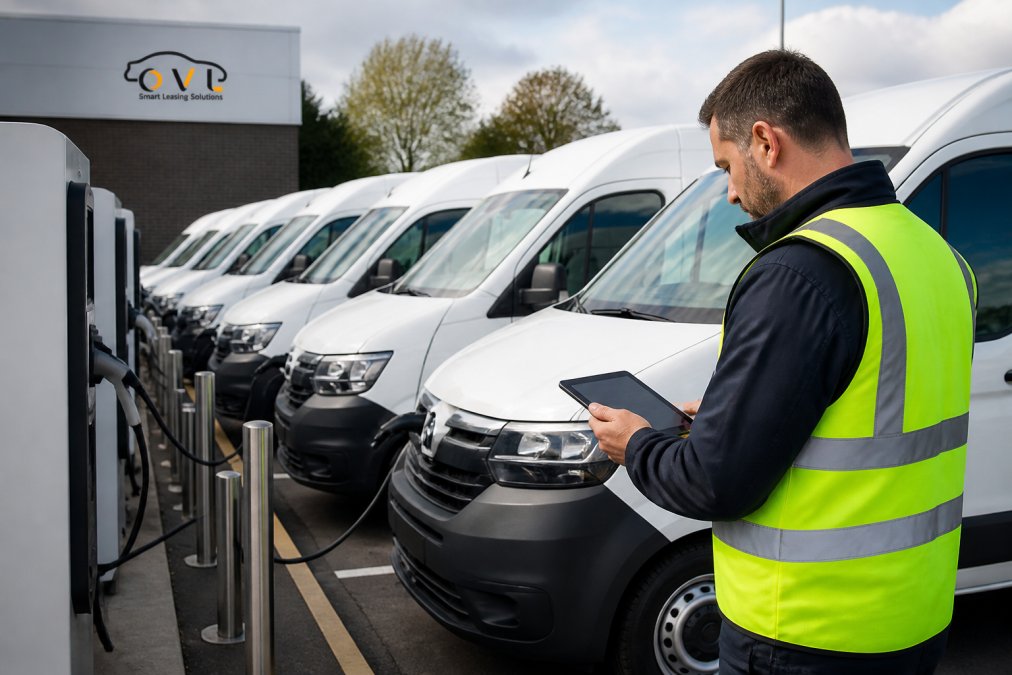
The challenge is planning the transition carefully. A fleet of 80 vehicles can't switch to electric overnight. You need charging infrastructure, driver training, route planning adjustments, and financial modelling to understand the transition costs and benefits.
OVL Group offers electric and hybrid leasing solutions specifically designed for growing businesses. Rather than treating electrification as an all-or-nothing decision, we help you develop a transition strategy that matches your operational needs. This might mean introducing electric vehicles for urban delivery routes whilst maintaining diesel vans for longer-distance work, or gradually replacing vehicles as they reach end-of-lease.
The cost-per-mile for electric vehicles continues to improve as battery technology advances and electricity costs stabilise. For businesses planning growth over the next 3-5 years, electrification is increasingly the optimal choice for new vehicle acquisitions.
Regulatory Compliance and Automated Reporting
Growing fleets face increasing regulatory requirements. Vehicle safety standards, emissions regulations, driver working time rules, and tax compliance all create administrative burden. Without proper systems, compliance becomes a constant source of stress and risk.
Automated reporting systems capture compliance data continuously rather than requiring manual record-keeping. Telematics systems generate reports on vehicle maintenance, driver hours, and safety metrics. Fleet management software tracks insurance renewals, MOT dates, and vehicle tax deadlines.
HMRC regulations around salary sacrifice schemes, vehicle tax, and benefit-in-kind reporting require accurate documentation. Mistakes in these areas can result in penalties and back-tax assessments. Automated systems reduce the risk of errors by ensuring data is captured consistently and reported correctly.
Many growing businesses discover that compliance burden is actually a hidden cost of scale. What worked with 20 vehicles becomes unmanageable with 80. Implementing proper systems early prevents this scaling problem.
OVL Group's FleetManagerPlus system simplifies fleet administration by centralising vehicle data, maintenance schedules, insurance information, and compliance reporting. Rather than managing spreadsheets across multiple departments, you have a single source of truth for fleet information. This reduces administrative time and ensures nothing falls through the cracks.
Growing businesses that invest in fleet optimisation gain a significant competitive advantage. Better cost control, improved safety, reduced administrative burden, and operational efficiency create room for growth without proportional increases in overhead.
OVL Group specialises in helping growing businesses transition from ad-hoc fleet management to strategic fleet optimisation. Through whole life cost analysis, telematics integration, and comprehensive fleet management support, we help you reduce costs, improve safety, and build the operational foundation for sustainable growth. Our tailored leasing solutions and salary sacrifice schemes are designed specifically for businesses like yours, companies that understand fleet management isn't just about vehicles, it's about business performance.
Ready to optimise your fleet performance? Explore our vehicle leasing special offers or discuss your specific requirements with our team. Whether you're managing vans, cars, minibuses, or transitioning to electric vehicles, we deliver the expertise and solutions to support your growth.
Frequently Asked Questions
Q: What KPIs should growing businesses track to measure fleet performance?
A: Track cost-per-mile, fuel consumption per vehicle, idle time, maintenance spend, driver safety incidents, and asset utilization rates. These metrics reveal operational efficiency, reveal cost drivers, and highlight where preventative maintenance or driver training will deliver the biggest return. Real-time monitoring through telematics systems makes tracking these KPIs automatic rather than manual.
Q: How does whole life cost analysis impact fleet profitability?
A: Whole life cost analysis includes finance, fuel, servicing, maintenance, repair, insurance, and tax across the entire vehicle lifecycle. Many businesses focus only on monthly rental but miss hidden costs that add to the total. Understanding the full picture helps you choose the right vehicle type, plan maintenance proactively, and make data-driven decisions about fleet expansion or electrification.
Q: What are the primary challenges when scaling a business fleet?
A: Growing fleets face compliance complexity, rising administrative burden, difficulty controlling driver behaviour across multiple sites, and unpredictable maintenance costs. Scaling without the right systems—telematics, preventative maintenance scheduling, and automated reporting—quickly overwhelms small teams. Change management is also critical: staff need training on new processes and tools to avoid resistance that stalls efficiency gains.
Q: Can salary sacrifice schemes for company cars work for electric vehicles?
A: Yes. Salary sacrifice schemes can be structured around electric vehicles and offer significant tax advantages under HMRC rules. Because electric vehicles typically have lower fuel and maintenance costs, the total benefit-in-kind value may be lower than diesel equivalents, making them attractive for both employer and employee. Professional guidance ensures compliance and maximises the financial benefit for your team.