Table of Contents
- The Financial Impact of Neglected Fleet Maintenance
- Vehicle Downtime and Operational Efficiency Loss
- Safety Risks and Liability Concerns
- Compliance and Regulatory Requirements Under DVSA Vehicle Maintenance Standards
- Premature Vehicle Wear and Resale Value Collapse
- Building a Fleet Maintenance Checklist for Compliance
- Whole Life Cost Analysis for Fleets: Why Prevention Saves Money
- Conclusion: Protect Your Fleet and Your Bottom Line
The Financial Impact of Neglected Fleet Maintenance
Last Updated: August 27, 2026
The Financial Impact of Neglected Fleet Maintenance
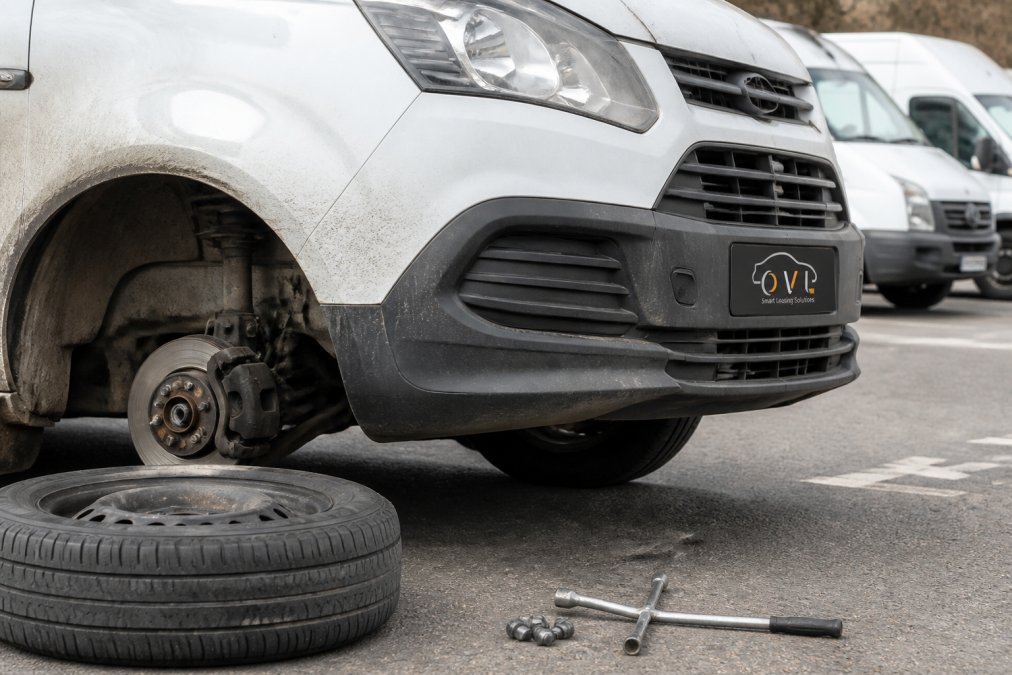
Neglected fleet maintenance transforms manageable operational costs into financial crises. A simple oil change costs under £50. A seized engine costs thousands. Teams that defer servicing spend 3-4 times more on emergency repairs than those running structured maintenance programmes (peer-reviewed research). A van costing £2,000 annually in scheduled servicing can rack up £8,000+ in unplanned breakdowns within a single year.
The financial damage compounds across fleets. Field service companies managing 50+ vans find that deferred maintenance creates cascading failures: vehicles fail at peak operational times, forcing expensive emergency repairs and lost revenue simultaneously. The teams controlling whole life costs implement structured servicing schedules. Those that don't face unpredictable expenses that wreck annual budgets.
Beyond direct repair costs, vehicle downtime drains revenue. When a van breaks down unexpectedly, it's not just the repair bill, it's lost revenue from idle vehicles, overtime wages for staff covering gaps, and customer dissatisfaction that erodes long-term contracts. This is precisely why many forward-thinking fleet operators choose Vehicle Leasing Special Offers and Van Leasing Special Offers, outsourcing vehicle management to specialists removes the burden of maintenance planning and ensures your fleet stays roadworthy without the unpredictable costs of ownership.
Vehicle Downtime and Operational Efficiency Loss
A single vehicle breakdown during peak hours costs far more than the repair itself. For field service teams, downtime directly translates to missed appointments and revenue loss. A domiciliary care provider with 30 vehicles losing one van for a week loses that van's productivity plus staff deployment flexibility across their entire operation.
Vehicle downtime creates cascading operational failures: technicians arrive at job sites without equipment, care workers can't reach clients on schedule, and customers experience service delays that damage reputation and create liability exposure. Preventive maintenance schedules keep vehicles in service. Reactive maintenance, fixing things only after they break, guarantees downtime during your busiest periods.

Asset utilisation metrics reveal the real cost. A well-maintained fleet achieves 85-90% utilisation rates (peer-reviewed research). A neglected fleet drops to 70-75% as vehicles spend time in repair shops. That 15-20% difference directly impacts revenue per vehicle and overall profitability. Emergency repairs also disrupt workflow, mechanics must drop scheduled work to handle urgent breakdowns, creating inefficiency across your entire maintenance operation.
Safety Risks and Liability Concerns
Neglected fleet maintenance creates direct safety hazards. Worn brake pads, bald tyres, and faulty suspension systems increase accident risk. When an accident occurs in a vehicle with known maintenance issues, your liability exposure becomes severe.
The legal framework in the UK is clear. Vehicle operators have a duty of care to ensure their vehicles are safe. The Health and Safety at Work etc. Act 1974 places responsibility on employers to maintain safe working conditions, including vehicle safety for staff using company vehicles (gov.uk). DVSA vehicle maintenance standards define baseline requirements for commercial vehicle safety.
If a vehicle with known maintenance defects causes an accident, you face potential prosecution for negligence. Insurance claims may be denied if the vehicle wasn't properly maintained. Your business could face enforcement action from regulatory authorities. Drivers operating unsafe vehicles face increased accident risk from brake failure, tyre blowouts, and steering problems. Beyond driver safety, third-party liability applies, if your vehicle causes an accident injuring another road user, the injured party can pursue claims against your business. If negligent maintenance contributed, your liability becomes clearer.
Employee wellbeing legislation also applies. Staff using unsafe vehicles may have grounds for workplace injury claims and can report safety concerns to enforcement authorities.
Compliance and Regulatory Requirements Under DVSA Vehicle Maintenance Standards
DVSA vehicle maintenance standards establish baseline requirements for commercial vehicle safety. These aren't optional guidelines, they're regulatory requirements. Vehicles must meet these standards to remain legally roadworthy.
The standards cover critical safety systems: brakes, tyres, lights, steering, suspension, and structural integrity. Each system has specific inspection intervals and maintenance requirements. Operators must maintain records demonstrating compliance.
The DVSA conducts roadside vehicle checks. Vehicles with maintenance defects can be removed from service immediately. Operators face penalty notices and potential prosecution for operating unroadworthy vehicles. The compliance burden falls on fleet operators. You're responsible for ensuring every vehicle meets DVSA standards, maintaining inspection records, ensuring drivers report defects, and addressing reported issues promptly.
Documentation is critical. DVSA vehicle maintenance standards require operators to keep maintenance records proving you conducted inspections and servicing. Without them, you can't demonstrate compliance. With them, you have a clear defence against enforcement action.
Premature Vehicle Wear and Resale Value Collapse
Neglected maintenance accelerates vehicle wear exponentially. An engine running on overdue oil changes suffers compounding damage. Suspension systems without regular servicing deteriorate faster. The cumulative effect is premature vehicle failure.
A well-maintained van operates reliably for 150,000+ miles. A neglected van fails at 80,000-100,000 miles, a 30-40% reduction in useful life. Resale value reflects this reality. A van with complete maintenance records commands significantly higher resale value than an identical van with gaps in service history.
A 5-year-old van with full service history might resale for £8,000-10,000. The same van without proper maintenance records might fetch £4,000-5,000, a 50% difference from the same starting vehicle.
Every deferred service reduces resale value. Every documented service increases it. Over a vehicle's lifecycle, proper maintenance preserves £2,000-4,000 in resale value per vehicle. This connects directly to whole life cost analysis, resale value is a component of total cost of ownership. Neglecting maintenance to save £500 in annual servicing can reduce resale value by £2,000+. This is why leasing through OVL Group's Van Leasing Special Offers and Vehicle Leasing Special Offers makes financial sense, you avoid resale risk entirely whilst benefiting from vehicles maintained to the highest standards throughout their lease term.
Building a Fleet Maintenance Checklist for Compliance
A fleet maintenance checklist for compliance is your operational foundation. It ensures nothing falls through the cracks and documents your due diligence. It proves you're taking reasonable steps to maintain safe, roadworthy vehicles.
The checklist must cover DVSA vehicle maintenance standards comprehensively, including daily driver checks, weekly inspections, and scheduled servicing intervals. Assign responsibility clearly, who conducts each check, when, and how results are documented.
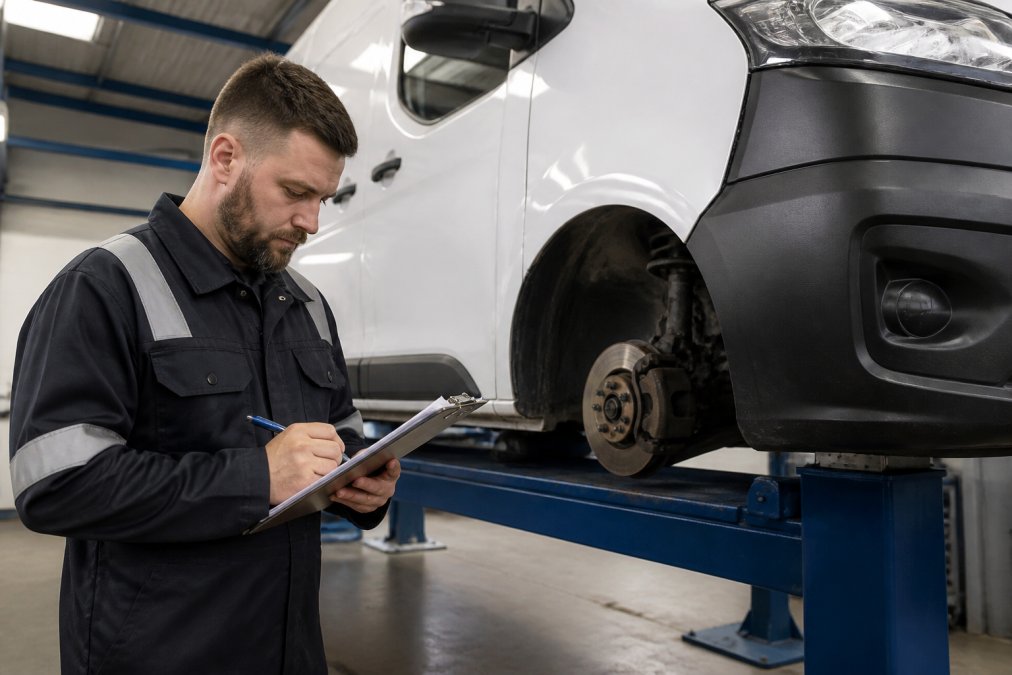
Daily driver checks are the first line of defence. Drivers should inspect tyres, lights, wipers, and fluid levels before operating vehicles. Weekly inspections examine brake condition, suspension components, and fluid leaks. Scheduled servicing follows manufacturer recommendations for oil changes, filter replacements, and system inspections.
Your checklist should include:
- Daily driver pre-operation checks
- Weekly mechanical inspections
- Monthly fluid level and tyre condition checks
- Quarterly brake system inspections
- Biannual suspension and steering checks
- Annual comprehensive servicing per manufacturer spec
- Defect reporting and tracking procedures
- Service completion sign-off and documentation
Assign clear ownership. Drivers report issues. Mechanics conduct inspections. A fleet manager tracks completion. Clear roles prevent things falling through cracks.
Whole Life Cost Analysis for Fleets: Why Prevention Saves Money
Whole life cost analysis for fleets reveals why maintenance investment pays dividends. This analysis considers every cost across a vehicle's lifecycle: purchase price, finance costs, fuel, insurance, maintenance, repairs, and resale value.
Most fleet operators focus on monthly rental or purchase price, ignoring 60-70% of total cost. A vehicle costing £200 per month to lease might cost £400-500 per month in total operating costs when including fuel, insurance, maintenance, and repairs.
Maintenance is the variable you control most directly. Preventive maintenance costs are predictable and manageable. Emergency repairs are unpredictable and expensive. A £500 scheduled service prevents a £3,000 emergency repair. A well-maintained vehicle over 5 years costs approximately £45,000-55,000 in total operating costs. A neglected vehicle over the same period costs £60,000-75,000. The difference is entirely preventable.
This analysis justifies investment in fleet management systems. A system reducing emergency repairs by 40% pays for itself within months. Better asset utilisation from fewer breakdowns generates additional revenue. Lower insurance premiums from better safety records add further savings.
OVL Group's whole life cost analysis helps fleet operators understand these dynamics. By examining finance costs, fuel efficiency, maintenance patterns, and resale value together, you see the true cost of different strategies. Most teams discover that investing in maintenance saves money overall. Our leasing solutions, including Electric / Hybrid Leasing and Lease Used Electric Vehicles, offer additional whole life cost advantages through lower fuel and maintenance expenses compared to traditional diesel or petrol fleets.
Conclusion: Protect Your Fleet and Your Bottom Line
Fleet maintenance isn't optional, it's foundational to operational success and financial performance. Neglected maintenance creates financial losses, operational disruption, safety risks, and regulatory exposure.
The solution is structured preventive maintenance combined with comprehensive fleet management. This requires investment in systems, processes, and discipline. It requires documenting everything and treating maintenance as a strategic operational priority.
OVL Group helps fleet operators implement comprehensive fleet management solutions. Through tailored vehicle leasing and whole life cost analysis, we help you understand the true cost of different operational strategies. Our FleetManagerPlus system simplifies administration and ensures compliance. Our team provides dedicated account management and strategic guidance.
Whether you manage 30 vehicles for a care provider or 80 vans across three regions, structured fleet management delivers measurable results: lower emergency repair costs, fewer vehicle breakdowns, better compliance documentation, higher resale values, and improved driver safety. Explore our Vehicle Leasing Special Offers and Van Leasing Special Offers to see how outsourcing your fleet to specialists removes maintenance burden whilst guaranteeing compliance and reliability.
Neglected fleet maintenance creates cascading problems that damage profitability and expose your business to serious risks. The solution is systematic: implement a structured maintenance programme, document everything, and treat vehicle maintenance as the operational priority it truly is. Contact OVL Group to discuss how our fleet management expertise and tailored vehicle rental solutions can optimise your fleet performance and reduce your total cost of ownership. Our team can show you exactly how structured maintenance protects both your vehicles and your bottom line.
Frequently Asked Questions
What are the legal consequences of poor vehicle maintenance for businesses?
Businesses operating neglected fleets face significant legal liability under the Health and Safety at Work etc. Act 1974 and Vehicle Excise and Registration Act 1994. The Driver and Vehicle Standards Agency (DVSA) can issue enforcement notices, prohibit vehicles from the road, and impose fines. Additionally, if an accident occurs involving a poorly maintained vehicle, your business may be held liable for damages and criminal prosecution. Fleet managers and directors can face personal liability if negligence is proven.
How does neglected maintenance impact fleet insurance premiums?
Insurers view poorly maintained fleets as higher risk and typically increase premiums. If a claim is made and the vehicle was not maintained to manufacturer standards, insurers may deny the claim entirely. Some policies include maintenance clauses requiring proof of scheduled servicing. Over time, a reputation for poor maintenance can result in policy cancellation or refusal of cover, leaving your business exposed and unable to operate legally.
What is the difference between reactive and preventive fleet maintenance?
Preventive maintenance involves scheduled servicing, inspections, and parts replacement before failure occurs. It reduces emergency breakdowns and extends vehicle life. Reactive maintenance waits until something breaks, then repairs it. This approach leads to costly emergency repairs, unexpected downtime, and cascading failures. Preventive maintenance typically costs less over the vehicle's lifetime because you avoid expensive emergency call-outs, parts damage, and lost productivity from sudden fleet unavailability.
Who is legally responsible for vehicle roadworthiness in a business fleet?
Under the Road Traffic Act 1988, the vehicle owner and operator are jointly responsible for roadworthiness. Fleet managers must ensure all vehicles meet DVSA standards and are fit for purpose. Drivers also have a duty to report defects immediately. If a vehicle is found unroadworthy during a roadside inspection, the operator faces fines and potential prohibition. Documented maintenance records are essential evidence of compliance; without them, you cannot prove the vehicle was maintained to legal standards.