Table of Contents
- Why Your Fleet Needs a Driver Handbook
- Legal Requirements and Compliance for Fleet Operations
- Driver Vehicle Check Procedures and Daily Walkaround Checks
- Driving at Work Policy Requirements and Driver Conduct Standards
- Fleet Driver Handbook Template: Essential Sections to Include
- Electric Vehicle Protocols and Modern Fleet Considerations
- Digital Adoption and Mobile Accessibility for Your Handbook
- Review, Update, and Continuous Improvement
Last Updated: August 25, 2026
Why Your Fleet Needs a Driver Handbook
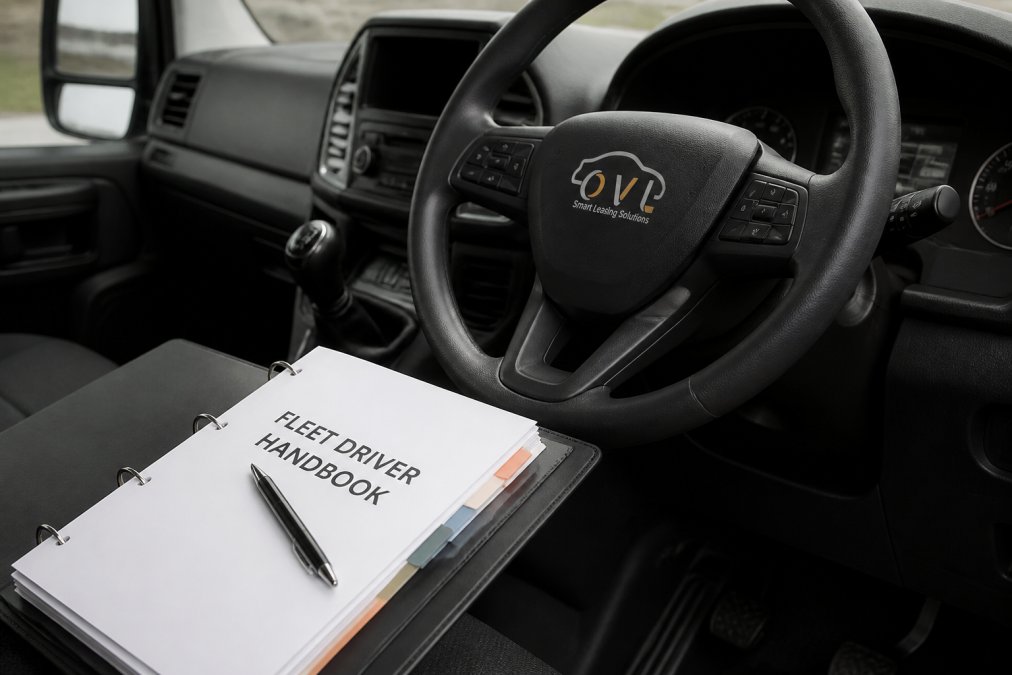
A fleet driver handbook is your operational foundation. It keeps drivers aligned, reduces incidents, and protects your business when things go wrong. Without one, you're relying on inconsistent verbal instructions instead of prevention.
The real value emerges during compliance audits, accident investigations, or onboarding. A well-structured handbook documents standards, clarifies expectations, and creates accountability. It demonstrates that your organisation takes duty of care seriously, which matters to insurers, regulators, and your risk profile.
At OVL Group, we work with fleet managers across field services, domiciliary care, and logistics. This guide walks you through what belongs in your fleet driver handbook, why each section matters, and how to structure it so drivers actually use it.
Legal Requirements and Compliance for Fleet Operations
Your fleet driver handbook must address the legal framework governing occupational road risk. The Health and Safety at Work etc. Act 1974 places a duty of care on employers to ensure the health and safety of employees and others affected by their work (hse.gov.uk). For fleet operations, this extends to vehicle safety, driver fitness, incident reporting, and journey planning.
The Management of Health and Safety at Work Regulations 1999 requires you to assess risks and implement control measures (hse.gov.uk). Your handbook should reflect these assessments and demonstrate how you're managing occupational road risk through driver vetting, vehicle maintenance, incident procedures, and driver training.
The Road Traffic Act 1988 governs licensing, insurance, and vehicle compliance. Your handbook should require licence verification at recruitment and periodically thereafter, and clearly state insurance requirements.
The Data Protection Act 2018 and UK GDPR apply when your handbook collects or references driver data, including telematics or incident details. Your handbook should outline how this data is handled, who has access, and retention periods.
HMRC regulations apply if you operate salary sacrifice schemes for electric vehicles or other benefits. Your handbook should clarify the tax implications and employee responsibilities under these schemes.
Driver Vehicle Check Procedures and Daily Walkaround Checks
Drivers need clear, standardised procedures for checking vehicles before use. These checks prevent incidents caused by mechanical failure, reduce downtime, and create a documented record of vehicle condition.

First-Use Checks Before Journey Start
Before every journey, drivers should perform a walkaround check covering tyres (condition and pressure), lights (headlights, brake lights, indicators), mirrors, wipers, and fluid levels. Your handbook should include a simple checklist format so drivers know exactly what to inspect.
Use clear language: "Check all tyres for visible damage, cuts, or bulges" rather than vague instructions. Include what drivers should do if they find an issue: report it immediately to the depot manager and do not use the vehicle until it's repaired.
Document the process. Digital checklists offer advantages: they're timestamped, harder to skip, and create an audit trail. Paper works if your fleet operates in areas with poor connectivity. The key is consistency.
End-of-Day Vehicle Inspection
At the end of each working day, drivers should perform a brief check to identify any damage or mechanical issues that occurred during use. This typically takes 2-3 minutes and focuses on visible damage, fuel level, and any warning lights.
Your handbook should clarify the driver's responsibility. If a driver causes damage and doesn't report it, that's a conduct issue. If damage occurs and the driver reports it promptly, that's good practice. Include a simple process: drivers note any damage on a checklist or in a digital system, take photos if damage is visible, and report it to the depot manager.
Driving at Work Policy Requirements and Driver Conduct Standards
Your handbook should establish clear standards for professional driving conduct, covering how drivers represent your business, interact with other road users, and what behaviours are unacceptable.
A driving at work policy must address mobile phone use. Drivers must not use handheld devices whilst driving, including for calls, texts, or navigation. Specify that sat-nav or music should be set up before the journey starts, or that hands-free systems should be used.
Fatigue is a significant risk factor in occupational road incidents (hse.gov.uk). Your handbook should include guidance on recognising fatigue and what drivers should do if they feel too tired to drive safely. Frame this as a safety priority, not a weakness.
Substance misuse, including alcohol and drugs, must be addressed clearly. Drivers must not drive under the influence of alcohol, illegal drugs, or certain medications that impair driving ability. Your handbook should outline your drug and alcohol policy and the consequences of breaching this standard.
Include expectations around vehicle care and professional presentation. Drivers should keep vehicles clean and tidy, report faults promptly, and treat vehicles with respect.
Fleet Driver Handbook Template: Essential Sections to Include
A comprehensive fleet driver handbook typically includes these core sections. Your specific handbook may emphasise different areas depending on your fleet type.
Incident and Accident Reporting Procedures
Your handbook must include a clear process for reporting incidents and accidents. This is critical for insurance, compliance, and learning. Drivers need to know what counts as an incident, who to contact, and what information to provide.
Define the timeframe for reporting. Most insurers require notification within 24 hours. Specify what information drivers should collect at the scene: other vehicles involved, driver details, registration numbers, insurance details, witness contact information, and photographs of damage. Provide a template or checklist so drivers know exactly what to gather.
Include guidance on driver conduct after an incident. Drivers should not admit liability or apologise for the accident. They should remain calm, prioritise safety, and call emergency services if anyone is injured. Document the internal escalation process so drivers know who to contact first and when the insurance company is notified.
Journey Planning and Safe Route Selection
Drivers should plan journeys in advance, considering distance, traffic conditions, weather, and vehicle capability. Your handbook should encourage drivers to use route planning tools and communicate planned routes to the depot.
Address vehicle-specific limitations. A large van may not fit through narrow country lanes. Include guidance on journey duration and breaks. Drivers should not exceed legal driving hour limits. For most drivers, this means a maximum of 10 hours per day with mandatory breaks.
Weather and seasonal considerations deserve mention. In winter, drivers should plan extra time for icy roads and poor visibility. Your handbook might include seasonal checklists: extra checks for winter (screen wash, tyre tread), or reminders about staying hydrated in summer.
Driver Fitness, Medical Standards, and Well-Being
Drivers must be medically fit to drive. Your handbook should outline your process for assessing fitness, including any medical questionnaires at recruitment and periodically thereafter.
Mental health and well-being are important for safe driving. Fatigue, stress, and low mood all impair concentration and reaction time. Your handbook should create space for drivers to discuss concerns without fear of judgment, including information about employee assistance programmes or mental health support.
Substance misuse includes prescription medications. Some medications impair driving ability. Your handbook should encourage drivers to discuss medications with their GP and to inform their manager if a medication might affect their driving. Include guidance on recognising when a driver is not fit to drive: excessive fatigue, emotional distress, or physical illness.
Vehicle Security and Blind Spot Awareness
Vehicle security is important, especially for vans carrying tools, equipment, or sensitive materials. Your handbook should outline basic security practices: locking doors when the vehicle is unattended, parking in well-lit areas when possible, and not leaving valuables visible inside the vehicle.
Blind spot awareness is critical for preventing incidents involving pedestrians or cyclists. Your handbook should explain that large vehicles have significant blind spots, particularly on the nearside (left side in the UK) and behind the vehicle. Drivers should use mirrors and reversing cameras where available, and should not assume they can see everything around their vehicle.
Electric Vehicle Protocols and Modern Fleet Considerations
If your fleet includes electric vehicles, your handbook should include EV-specific guidance covering charging procedures, range management, and what to do if a vehicle runs out of charge.

Charging procedures vary depending on your charging infrastructure. Your handbook should explain how to use your standard chargers and what to do if drivers need to charge at public charging networks. Include information about different connector types, charging speeds, and payment methods.
Range management is crucial for EV fleets. Your handbook should include guidance on checking available range before starting a journey, planning routes to include charging stops if necessary, and understanding how factors like cold weather and motorway driving reduce range.
If your organisation operates salary sacrifice schemes for electric vehicles, your handbook should clarify the tax implications and any restrictions on personal use. For fleets considering the transition to electric, Electric / Hybrid Leasing and Lease Used Electric Vehicles offer options that can support your operational planning.
Digital Adoption and Mobile Accessibility for Your Handbook
A printed handbook gathers dust. A digital handbook gets used. Your handbook should be accessible on mobile devices so drivers can reference it in the vehicle, at a customer site, or anywhere they need it.
Consider a mobile app or a responsive web version that works on smartphones and tablets. Drivers should be able to search for specific topics quickly. Include digital checklists for vehicle checks that are timestamped and create a digital record.
Make your handbook searchable and regularly updated. When policies change, update the handbook immediately and notify drivers. Ensure text is large enough to read on a mobile screen. Use clear language and short sentences. Include diagrams where they help explain complex procedures.
Review, Update, and Continuous Improvement
Your fleet driver handbook should be reviewed annually and updated whenever policies change. Assign responsibility for this, typically the fleet manager or operations manager.
When reviewing, consider incidents and near-misses from the past year. If drivers have had multiple accidents at a particular junction, that suggests a need for better journey planning guidance. Gather feedback from drivers through a simple survey asking what they found confusing or unhelpful.
Document changes and communicate them. When you update the handbook, send a summary of changes to all drivers and explain why the change was made. Include a version number and date so drivers know they're looking at the current version.
Your fleet driver handbook is a reflection of your organisation's commitment to safety, compliance, and professional standards. It demonstrates duty of care to your drivers, your customers, and regulators. A comprehensive, well-maintained handbook reduces incidents, clarifies expectations, and creates a culture where safety and professionalism are non-negotiable.
Managing a fleet involves balancing safety, compliance, and operational efficiency. A strong fleet driver handbook is foundational to all three. At OVL Group, we work with fleet managers to build policies and systems that keep drivers safe and operations running smoothly. Our whole life cost analysis and fleet management expertise helps you optimise not just vehicle choice, but how your fleet operates day-to-day. Whether you're managing vans, minibuses, or transitioning to electric vehicles, we can help you develop the policies and infrastructure that support your fleet's success. Explore our Vehicle Leasing Special Offers and Van Leasing Special Offers to find options that align with your fleet strategy. Explore OVL Group's tailored fleet solutions
Section | Key Content | Purpose |
|---|---|---|
Legal Compliance | Health and Safety Act 1974, HMRC regulations, Road Traffic Act 1988 | Establishes legal framework and employer duty of care |
Vehicle Checks | First-use and end-of-day inspection checklists | Prevents mechanical failures and documents vehicle condition |
Driver Conduct | Fatigue, substance misuse, mobile phone use, professional standards | Reduces incidents caused by driver behaviour |
Incident Reporting | Clear escalation process, information to collect, insurance procedures | Ensures consistent handling and compliance |
Journey Planning | Route selection, duration limits, weather considerations | Improves safety and reduces breakdowns |
Driver Fitness | Medical assessment, mental health support, medication guidance | Ensures drivers are safe to operate vehicles |
Vehicle Security | Locking procedures, parking standards, high-value equipment protocols | Protects assets and reduces theft or loss |
EV Protocols | Charging procedures, range management, battery care | Supports fleet transition to electric vehicles |
Digital Access | Mobile app, searchable content, regular updates | Ensures drivers can access handbook when needed |
Frequently Asked Questions
Is a driver handbook a legal requirement for UK businesses?
While no single law mandates a driver handbook by name, UK employers have a duty of care under health and safety law to provide drivers with clear guidance on safe operation, vehicle compliance, and incident reporting. The Health and Safety at Work etc. Act 1974 requires employers to protect employee safety. A comprehensive fleet driver handbook demonstrates this duty of care and protects your business from liability. It also supports compliance with HMRC regulations if you operate salary sacrifice vehicle schemes.
What should a driving at work policy cover?
A driving at work policy requirements should address licence verification, medical fitness standards, journey planning procedures, incident and accident reporting, vehicle maintenance responsibilities, driver conduct expectations, fatigue management, and blind spot awareness. Include clear procedures for reporting defects, protocols for emergency situations, and consequences for policy breaches. The policy must align with your occupational road risk assessment and reflect the specific hazards your fleet faces, whether you operate vans, minibuses, or specialist vehicles.
How often should a fleet driver handbook be updated?
Review your fleet driver handbook at least annually, or whenever significant changes occur: new vehicle types (such as electric vehicles), updated HMRC regulations, changes to insurance requirements, new telematics systems, or following a serious incident. Communicate updates to all drivers promptly and maintain records of distribution. Digital handbooks allow you to push updates instantly, ensuring drivers always access current procedures. Document each revision with dates and changes made for audit purposes.
What driver vehicle check procedures should drivers follow?
Drivers should perform a daily walkaround check before starting their journey, inspecting tyres for damage and correct pressure, checking lights and wipers function, verifying mirrors are clean and properly adjusted, and looking for obvious damage or leaks. At the end of each day, drivers should report any defects discovered. First-use checks should include seat adjustment, seatbelt function, and emergency equipment location. Document all checks in writing or via your fleet management system. These procedures reduce accidents, support duty of care, and help maintain vehicle compliance throughout the fleet.