
Last Updated: October 30, 2026
Quick Summary
Future proofing logistics with electric vehicle fleets means planning routes, depot charging and whole life costs before you order vehicles. Map daily mileage and payloads first, then phase the switch starting with short urban routes where charging is proven at the depot.
- Map daily mileage, payloads and dwell times before speaking to any vehicle supplier.
- Start with short urban routes under 80 miles daily once depot charging is proven.
- Speak to your electricity supplier early, as upgrading depot power takes time.
- Build whole life cost models on real route data, not brochure range figures.
- Train drivers on regenerative braking and set a clear home-charging policy.
Table of Contents
- Why Electric Vehicle Fleets Are Reshaping Logistics
- Building Your Electric Fleet Transition Plan
- Electric Van Charging Infrastructure: Depot, Home and On-Road
- Electric Vehicle Whole Life Cost Analysis: Proving the Numbers
- Electric Fleet Route Planning for Real-World Operations
- UK Incentives and HMRC Rules for Electric Fleets
- Common Mistakes That Derail an Electric Fleet Rollout
- Leasing Your Electric Fleet with OVL Group
- Frequently Asked Questions
Why Electric Vehicle Fleets Are Reshaping Logistics
Future proofing logistics with electric vehicle fleets is no longer a green ambition; it is an operational necessity. Fleet managers across Oxfordshire often grapple with the same question: how do you move to electric without breaking your budget or your service levels? The answer starts with understanding what is actually driving the change.
Electric vehicle fleets are groups of battery-powered vans, cars and minibuses used for business transport, managed as a single operational unit. For logistics, the appeal is straightforward: lower running costs, fewer moving parts and access to clean air zones that increasingly restrict older diesel vehicles. Urban delivery operations feel this most acutely, because stop-start routes suit electric drivetrains far better than long motorway hauls. The UK government's guidance on clean air zones sets out where local restrictions apply, and that map is expanding rather than shrinking.
The commercial logic can be compelling. Running costs and servicing requirements differ between electric and diesel vehicles, and the right comparison depends on your own routes and figures.
Building Your Electric Fleet Transition Plan
A successful electric fleet transition plan starts with your routes, not your vehicle shortlist. Map your daily mileage, payloads and dwell times before you speak to a single supplier. Most fleets discover that a large share of their journeys sit comfortably within a single charge, which changes the whole conversation.
A phased switch is a sensible approach. For a step-by-step guide covering infrastructure, costs and incentives, see our electric fleet transition plan guide. Starting with the vehicles on the most predictable, shortest routes allows the fleet to expand as confidence and charging infrastructure grow.
A simple phasing model to consider:
| Phase | Fleet Segment | Typical Trigger to Move On |
|---|---|---|
| 1 | Short urban routes under 80 miles daily | Charging proven at depot |
| 2 | Regional field service vans | Route data confirms range comfort |
| 3 | Remaining long-distance and specialist vehicles | Public charging confidence established |
Committing an entire fleet to a single delivery date can make a rollout harder to manage, so staggered phasing is worth considering.
Electric Van Charging Infrastructure: Depot, Home and On-Road
Charging strategy is a key factor in whether an electric fleet works in practice. Depot charging is a common approach for many operations: vehicles can return to base overnight and charge on off-peak tariffs where available. Home charging suits staff who take vans home, though you need a clear policy on who pays for the electricity. On-road charging covers the exceptions. Our guide to managing electric fleet charging costs sets out smart charging strategies across depot, home and on-road charging.
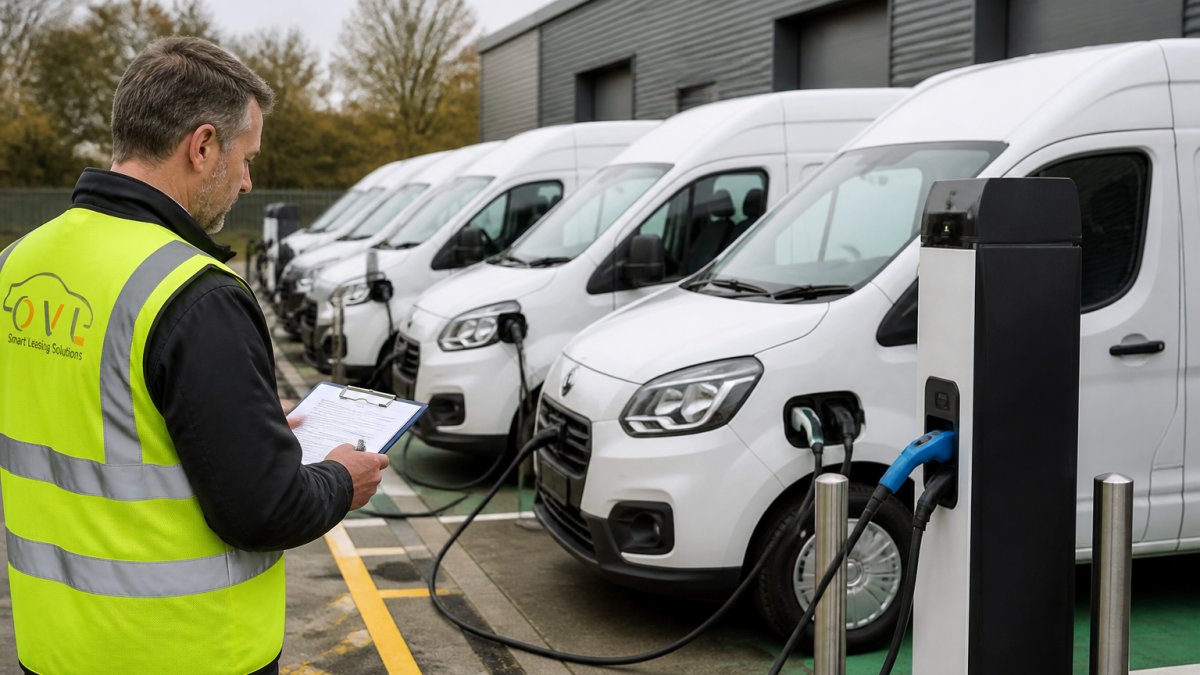
The practical mistake is under-planning depot power. Speak to your electricity supplier early about capacity, because upgrading a supply takes time.
Electric Vehicle Whole Life Cost Analysis: Proving the Numbers
Electric vehicle whole life cost analysis is a useful way to compare options. It means comparing the total cost of ownership across finance, fuel or electricity, service, maintenance and repairs, and tax, rather than focusing only on the headline lease rate. If you need to clarify what a whole life cost breakdown includes, such as insurance and tax line items, our guide explains the detail.
Build your model on real route data, not brochure range figures. Cold weather, payload and heater use all affect consumption, so use conservative assumptions. Leaving out charging infrastructure or downtime during installation can skew the comparison.
Electric Fleet Route Planning for Real-World Operations
Electric fleet route planning means matching each journey to a vehicle's usable range with a sensible safety margin, then building charging into the working day where needed. Real-world range is lower than the official figure, particularly in winter, so plan around the worst case rather than the best.
For urban delivery, this is rarely a problem. For field service teams covering rural areas, it demands more thought. Compare maintenance expectations carefully, because electric vans have different servicing requirements and tyre and brake wear patterns from diesel vans. Fleets that plan routes around charging, rather than treating it as an afterthought, are generally better placed to manage range concerns.
UK Incentives and HMRC Rules for Electric Fleets
UK tax treatment is one of the strongest arguments for electrification, but it must be handled correctly. HMRC publishes the current benefit-in-kind rates and salary sacrifice rules, so always check the official position before you build a scheme into your budget.
Getting the compliance detail right before you promote a scheme internally is important. Salary sacrifice carries reporting obligations, and mistakes can be costly to unwind.
Common Mistakes That Derail an Electric Fleet Rollout
The failures we see share familiar patterns. Ordering vehicles before confirming depot power. Assuming brochure range equals winter range. Forgetting to train drivers on regenerative braking and charging etiquette. Neglecting a home-charging policy for staff who take vans home.
Then there is the paperwork trap. Managing maintenance, compliance and charging records across dozens of vans quickly becomes unmanageable on spreadsheets. A common mistake is underestimating this admin burden and only addressing it after it bites. Building a single system for fleet administration from the start saves considerable time later.
Leasing Your Electric Fleet with OVL Group
Leasing can reduce the risk involved in electrification. At OVL Group, we provide tailored vehicle leasing for cars, electric vehicles, vans and minibuses, backed by whole life cost analysis and dedicated account management. Our FleetManagerPlus system simplifies fleet administration, and our salary sacrifice schemes can help make electric vehicles tax-efficient for your staff.
We can help fleets build a transition plan, assess the numbers and manage ongoing administration so your team can focus on operations. Explore our electric and hybrid leasing options to see how the numbers work for your fleet, and check our Vehicle Leasing Special Offers and Van Leasing Special Offers for current deals.
Frequently Asked Questions
How can logistics businesses future-proof their fleets with electric vehicles?
Start with a written electric fleet transition plan that phases vans in by route and depot rather than replacing the whole fleet at once. Model the whole life cost of each vehicle, including finance, energy, servicing, maintenance and repairs and tax, then confirm charging capacity at each site before you order. Review routes to check daily mileage against real-world range. A staged rollout lets you test driver behaviour, tariff choices and charging routines on a small group before committing the rest of the fleet.
Are electric vans suitable for logistics operations in the UK?
For most urban and regional delivery work, yes. Electric vans suit fixed daily routes with a return-to-depot pattern, which covers a large share of field service and last-mile logistics. The main constraints are payload and range on longer rural runs, plus access to charging at or near the depot. Assess your longest regular route, the heaviest loads and whether drivers can charge overnight. Where a route genuinely exceeds what a van can do in a day, keep a diesel or hybrid vehicle for that duty cycle rather than forcing the switch.
How should a business plan charging for an electric vehicle fleet?
Map charging to where vehicles spend time: overnight at the depot, at drivers' homes for staff who take vans home, and public or en-route points for top-ups. Confirm the site's electrical capacity with a qualified installer before ordering vehicles, because upgrading supply can take longer than the vans themselves. Decide who pays for home charging and how it is reimbursed, and set a clear policy for public charging costs. Off-peak tariffs and smart charging can reduce energy spend, but the priority is enough reliable capacity at the depot.
What should a fleet manager assess before switching logistics vehicles to electric?
Assess route lengths and daily mileage, payload and load space, depot charging capacity, driver home-charging arrangements and the whole life cost of each candidate vehicle against its diesel equivalent. Check the availability of suitable models in the bodystyle you need, and confirm lead times with your leasing provider. Review your maintenance arrangements, since electric vans need different servicing skills. Also check how the switch interacts with your salary sacrifice scheme and HMRC benefit-in-kind treatment before you commit.
How can businesses compare electric and petrol or diesel fleet options?
Compare on whole life cost, not sticker price. Add finance or lease payments, energy or fuel, servicing, maintenance and repairs, tyres, and tax, then divide by the expected miles over the term to get a cost per mile. Include the cost of any charging infrastructure and its installation. Run the comparison for each duty cycle separately, because a van that suits electric on urban routes may not on long rural runs. A structured whole life cost analysis from a leasing specialist makes the comparison defensible to a finance director.
What operational changes are needed when introducing electric vehicles to a logistics fleet?
Drivers need training on range, regenerative braking, pre-conditioning and charging routines. Schedules may need adjusting so vehicles return to base with enough charge for the next day, and route planning should account for payload, weather and terrain. You will need a charging policy covering depot, home and public points, plus a process for reimbursing home energy costs. Maintenance planning changes too, since servicing intervals and skills differ. Appointing a named fleet contact and reviewing the first few months of data will surface issues early.
What UK rules should businesses consider when planning an electric fleet?
Check HMRC guidance on benefit-in-kind rates for electric company cars and vans, and on salary sacrifice arrangements, because the tax treatment drives much of the business case. Confirm the VAT treatment of charging and leasing with your adviser. Local authorities set their own rules on charging point installation and parking, and clean air zone charges apply in some cities, so check the areas your routes cover. Official HMRC guidance sets out the relevant position, and tax positions should be confirmed with your own adviser.
How can fleet managers assess whether electric vehicles suit their routes?
Pull a month of telematics or journey data and look at the distribution of daily mileage, not just the average. Identify the longest regular runs, the loads carried and whether vehicles return to base each night. Compare those figures with the real-world range of the vans you are considering, allowing for load, weather and heating or cooling. Then check charging availability at each end of the route. Electric fleet route planning software can model this before you commit, and a small pilot group will confirm whether the theory holds in practice.
Electrifying a fleet is a decision that rewards planning over haste. If you want a partner who will model the costs, manage the compliance and support you through every phase, OVL Group is ready to help. Get started with OVL Group and build an electric fleet that cuts operational costs and keeps your logistics moving.